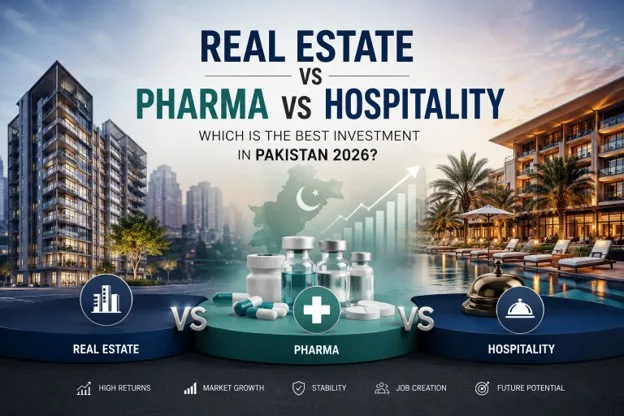
Real Estate vs Pharma vs Hospitality: Which Is the Best Investment in Pakistan 2026?
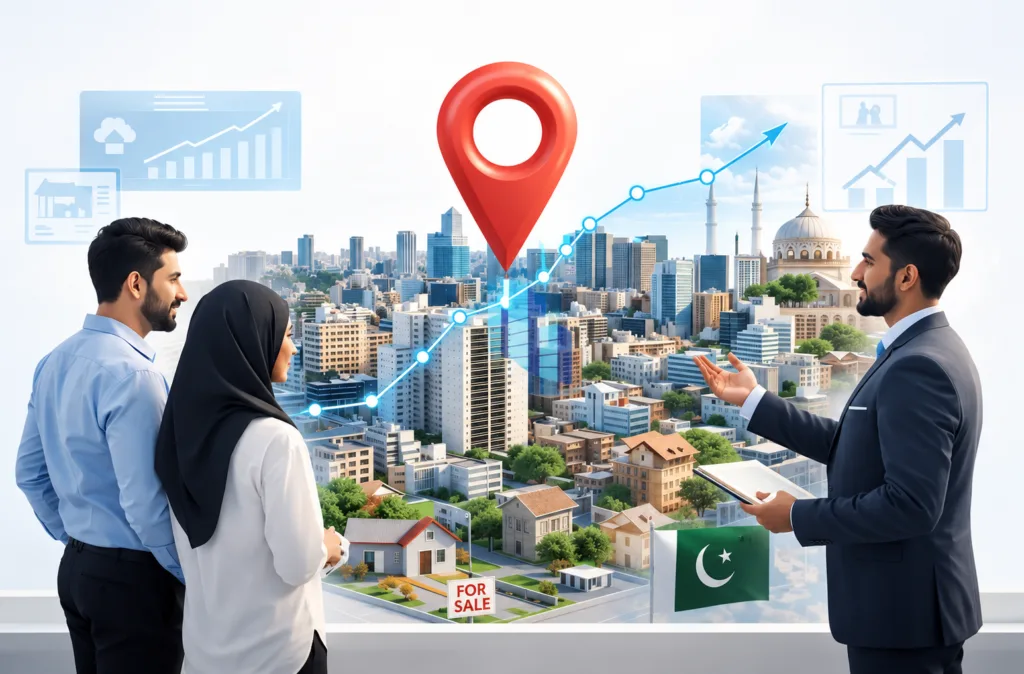
Every family in Pakistan has had this conversation at least once. Maybe it happened at a dinner table, maybe on a phone call with a brother or cousin living abroad. Someone has some money saved could be PKR 500,000, could be PKR 5,000,000, could be years of remittance sitting quietly in a foreign bank account and the same question always comes up:
“Where should I actually put this money — real estate, pharma, or hospitality?”
It’s not a small question, and it shouldn’t be answered on gut feeling alone. Put your money in the wrong place and it just sits there, quietly losing value to inflation. Put it in the right place and it can change your family’s future for the next twenty years.
This guide is written to help you answer that question properly. We’ll start with the big picture — Pakistan’s economy, what each sector is really worth, how fast each one is growing — and then bring it all the way down to a personal decision: which sector actually suits you, your city, and your comfort with risk. By the end, you’ll also see how one Pakistani group, ISMMART Group of Industries, has built real, working projects across all three of these sectors, so you can see the theory turned into something you can actually visit and invest in.
Table of Contents
- Why This Question Matters in Pakistan Right Now
- Real Estate in Pakistan
- Pharma in Pakistan
- Hospitality in Pakistan
- Side-by-Side Comparison: Returns, Risk, and Entry Cost
- Introducing ISMMART Group of Industries
- Apex Estate
- Tower 17 — Faisal Hills, Islamabad
- Spire Mall
- ISMMART Pharmaceuticals
- ISMMART Hospitality — Taam-ul-Khaas & Hotel 17
- What Makes ISMMART Different From Other Companies
- Frequently Asked Questions
- Final Verdict
1- Why This Question Matters in Pakistan Right Now
Pakistan’s economy has had a rough few years, and most of us felt it directly — in grocery bills, in school fees, in how far a salary actually stretches. But 2025 and 2026 have brought a bit of breathing room. Inflation has cooled down sharply from the painful highs of 2023. Interest rates have dropped from over 20% to around 11%, which means loans and installment plans are finally affordable again. And remittances from overseas Pakistanis have crossed 30 billion dollars a year, with a big share of that money actively looking for a home in local projects rather than sitting untouched abroad.That’s exactly the kind of moment where the “where should I invest” question stops being a lazy dinner-table debate and becomes urgent. Three sectors keep coming up in that conversation, and for good reason — they’re all real, all proven, and all genuinely open to a normal investor, not just billionaires. Let’s go through each one honestly, one at a time.
2- Real Estate in Pakistan
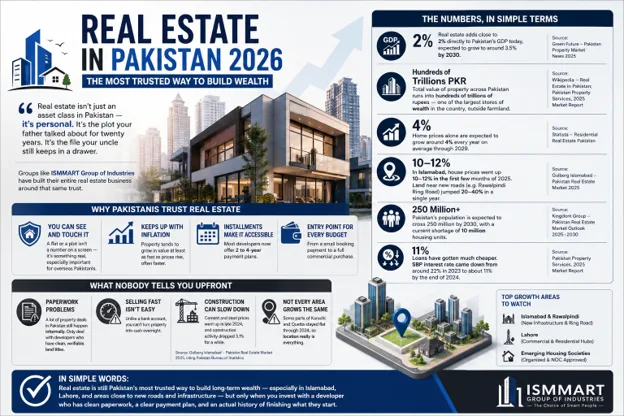
If you grew up in a Pakistani household, you already know real estate isn’t just an “asset class” here — it’s personal. It’s the plot your father talked about buying for twenty years. It’s the file your uncle still keeps in a drawer. This emotional connection is real, and it’s part of why real estate keeps winning the trust of ordinary Pakistanis, generation after generation. Groups like ISMMART Group of Industries have built their entire real estate business around that same trust, which we’ll come back to later in this guide.
The Numbers, In Simple Terms
- Real estate adds close to 2% directly to Pakistan’s GDP today, and experts expect this to grow to around 5% by 2030 as the sector becomes more organised and transparent. (Source: Green Future — Pakistan Property Market News 2025)
- Depending on how you measure it, the total value of property across Pakistan runs into hundreds of trillions of rupees — one of the largest stores of wealth in the entire country, outside farmland. (Source: Wikipedia — Real Estate in Pakistan; Pakistan Property Services, 2025 Market Report)
- Home prices alone are expected to grow around 4% every year on average through 2029. (Source: Statista — Residential Real Estate Pakistan)
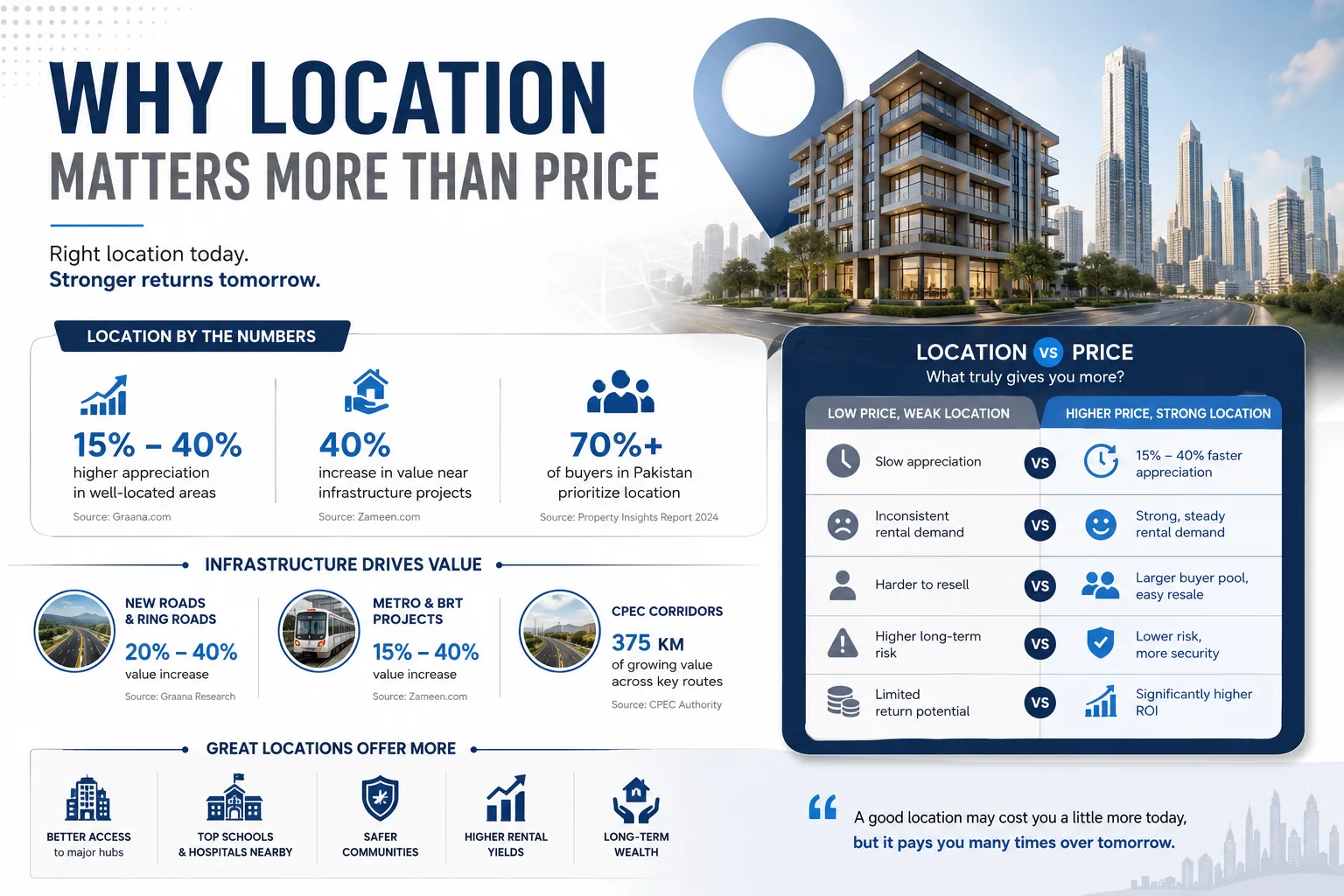
- In Islamabad specifically, house prices went up 10 to 12% in just the first few months of 2025. Land near new roads, like the Rawalpindi Ring Road, jumped 20 to 40% in a single year. (Source: Gulberg Islamabad — Pakistan Real Estate Market 2025)
- Pakistan’s population is expected to cross 250 million people by 2030, and the country is already short of 10 million housing units. That gap doesn’t close on its own — it needs new construction, year after year. (Source: Kingdom Group — Pakistan Real Estate Market Outlook 2025–2030)
- Loans have also gotten much cheaper. The State Bank’s interest rate came down from around 22% in 2023 to about 11% by the end of 2024, which means monthly installments on property are far more manageable now than they were two years ago. (Source: Pakistan Property Services, 2025 Market Report)
Why Pakistanis Trust Real Estate
- You can see it and touch it. A flat or a plot isn’t a number on a screen — it’s something real, and that matters a lot, especially to overseas Pakistanis who want something tangible tied to home.
- It keeps up with inflation. Property tends to grow in value at least as fast as prices rise, often faster.
- Installments make it accessible. Most large developers now offer 2 to 4-year payment plans, so you don’t need the full amount sitting in your account on day one.
- There’s an entry point for almost every budget — from a small booking payment to a full commercial purchase.
What Nobody Tells You Upfront
- Paperwork problems are common. A lot of property deals in Pakistan still happen informally, which is exactly why you should only deal with developers who have clean, verifiable land titles.
- Selling fast isn’t easy. Unlike a bank account, you can’t turn property into cash overnight.
- Construction can slow down. Cement and steel prices went up in late 2024, and construction activity actually dropped 3.1% for a while because of it. (Source: Gulberg Islamabad — Pakistan Real Estate Market 2025, citing Pakistan Bureau of Statistics)
- Not every area grows the same way. Some parts of Karachi and Quetta stayed flat through 2024, so location really is everything.
In simple words: real estate is still Pakistan’s most trusted way to build long-term wealth — especially in Islamabad, Lahore, and areas close to new roads and infrastructure — but only when you invest with a developer who has clean paperwork, a clear payment plan, and an actual history of finishing what they start.
3- Pharma in Pakistan
Pharma doesn’t get talked about at the dinner table the way real estate does, but it might be the most quietly dependable sector on this list. People don’t stop buying medicine when times are hard — if anything, they need it more. This is exactly why groups that already run pharmaceutical operations, like ISMMART Pharmaceuticals under the ISMMART Group, are worth understanding before you write pharma off as “too technical” for a normal investor.
The Numbers, In Simple Terms
- By the end of 2025, Pakistan’s pharma market crossed Rs 1 trillion in yearly value for the first time — making it one of the biggest industrial sectors in the entire country. Exports also crossed 450 million dollars in 2025, one of the fastest growth rates the sector has seen in over twenty years, with Pakistani companies now selling more medicine to Africa, Central Asia, and the Middle East than ever before. (Source: The News Pakistan — Pharma Sector in 2025)
- Retail pharma sales alone crossed Rs 1.049 trillion, with local Pakistani companies growing their sales volume by almost 5% in just one year. (Source: Profit by Pakistan Today, citing IQVIA data)
- There are more than 750 licensed pharmaceutical companies and around 800 manufacturing plants across the country, serving a population of over 240 million people. The market is dominated by a small group of strong players — the top 10 companies control about 48% of it, which tells you that trust and scale matter more here than almost any other sector. (Source: Wikipedia — Pharmaceutical Industry in Pakistan)
- The biggest weakness is that Pakistan still imports over 90% of raw material used to make medicine, mostly from China and India. This is also the biggest long-term opportunity for any company willing to build local manufacturing. (Source: Wikipedia — Pharmaceutical Industry in Pakistan)
Why Pakistanis Are Starting to Take Pharma Seriously
- People always need medicine, recession or no recession. That’s rare stability in an otherwise unpredictable economy.
- Exports are genuinely growing. As other countries look for suppliers outside a single source, Pakistan’s lower costs and skilled workforce are winning new business.
- Recent government reforms helped. Price rules loosened up in 2024-25, giving manufacturers room to actually make a fair margin again after years of rising costs.
The Honest Risks
- The rupee matters a lot here. Since most raw material is imported, a weaker rupee immediately makes medicine more expensive to produce.
- Government pricing decisions can change quickly and affect profits.
- This isn’t a sector you enter alone easily. Building a pharma factory needs serious capital, labs, and regulatory approval. For most people, the smarter way in is backing a group that already has the manufacturing, the research labs, and the approvals in place.
In simple words: pharma is one of the steadiest, most demand-guaranteed sectors in Pakistan, with real export growth ahead of it — but it rewards patience and partnership with an established manufacturer far more than it rewards someone trying to start from zero on their own.
4- Hospitality in Pakistan
Hospitality is the sector that moves fastest and feels the most alive. Think about it — every wedding hall, every new restaurant opening in your city, every hotel your relatives stayed at during a family trip, that’s this sector. It’s also the one where you can actually watch your investment work, because a good restaurant or hotel starts generating income almost immediately, unlike a plot that just sits there appreciating quietly. This is the space where ISMMART Hospitality operates, running dining brands like Taam-ul-Khaas and hospitality projects like Hotel 17, which we’ll cover in detail further down.
The Numbers, In Simple Terms
- Pakistan’s restaurant industry alone was worth close to 8 billion dollars in 2025, and it’s expected to keep growing at around 7% every year. Full-service, sit-down restaurants — the kind of dining experience people actually plan an evening around — have been growing even faster, close to 7.8% a year, as more people in cities want a proper dining experience, not just fast food. (Source: MarketIntelo — Pakistani Restaurant Market Research Report)
- The wider hospitality industry, which includes hotels and accommodation, is projected to grow at more than 5% every year through 2033, with premium and luxury hotels and restaurants growing faster than the budget segment as more people in cities like Lahore, Islamabad, and Karachi have extra income to spend on dining out and quality stays. (Source: Data Insights Market — Hospitality Industry in Pakistan 2025)
- Karachi, Lahore, and Islamabad together generate close to 970 million dollars a year in restaurant and food-service revenue alone — a huge, proven local market before you even think about tourism. (Source: MarketIntelo — Pakistani Restaurant Market Research Report)
Why Hospitality Is Worth a Serious Look
- You see returns fast. A well-run restaurant or hotel earns from month one, unlike real estate, which mostly pays you back through appreciation over years.
- Entry cost can be lower than real estate or pharma, especially through a partnership with an already-established brand.
- People in Pakistan love eating out, and that habit has only grown stronger with a younger, more urban population.
- Multi-cuisine and multi-location brands spread the risk — if one branch has a slow month, others carry the business.
The Honest Risks
- It needs daily attention. Unlike a plot you can simply lock and leave, a restaurant or hotel needs active, hands-on management every single day.
- Security and public mood affect business fast. A bad news cycle can quiet down footfall for weeks.
- Not every city has the same appetite. Big cities support premium dining much better than smaller towns right now.
In simple words: hospitality gives you the fastest, most visible return of the three sectors, and Pakistan’s growing, younger, more urban population is only going to eat out more, not less — but it rewards backing an established, well-run brand over a single, standalone outlet.
5- Side-by-Side Comparison: Returns, Risk, and Entry Cost
| Factor |
Real Estate |
Pharma |
Hospitality |
| Size in Pakistan |
Roughly 2% of GDP, hundreds of trillions in rupee value |
Crossed Rs 1 trillion in 2025 |
Restaurant sector alone worth US$1.8 billion in 2025 |
| Yearly Growth |
Around 4%, higher in fast-growing areas like Islamabad |
Small overall market growth, but exports growing over 20% per year |
6.5% to 8% per year |
| Money Needed to Start |
Low to high — installment bookings make it flexible |
High — best entered through an existing manufacturer |
Low to medium — franchise or partnership friendly |
| How Fast You Can Sell / Exit |
Slow — property takes time to sell |
Medium — usually accessed through partnership or shares |
Medium to fast — an operating business earns from day one |
| When You See Returns |
Later — mostly through appreciation over years |
Later — needs time to scale manufacturing |
Fast — revenue starts almost immediately |
| Biggest Risk |
Paperwork and construction delays |
Rupee value and import costs |
Security news and daily management |
| Best Suited For |
Long-term wealth building, especially overseas Pakistanis |
Patient investors who want stability |
People who want to see their money working sooner |
The honest answer: there’s no single “best” sector on its own — there’s a best combination, based on your own timeline and how much risk you’re comfortable carrying. That’s exactly why groups working across all three sectors at once, like ISMMART, have become so appealing to Pakistani investors — instead of putting all your eggs in one basket, you get a taste of all three growth stories under one name you can actually meet and talk to.
6- Introducing ISMMART Group of Industries
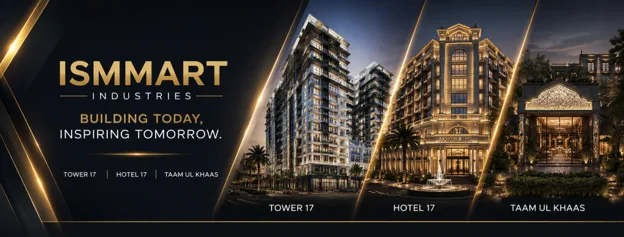
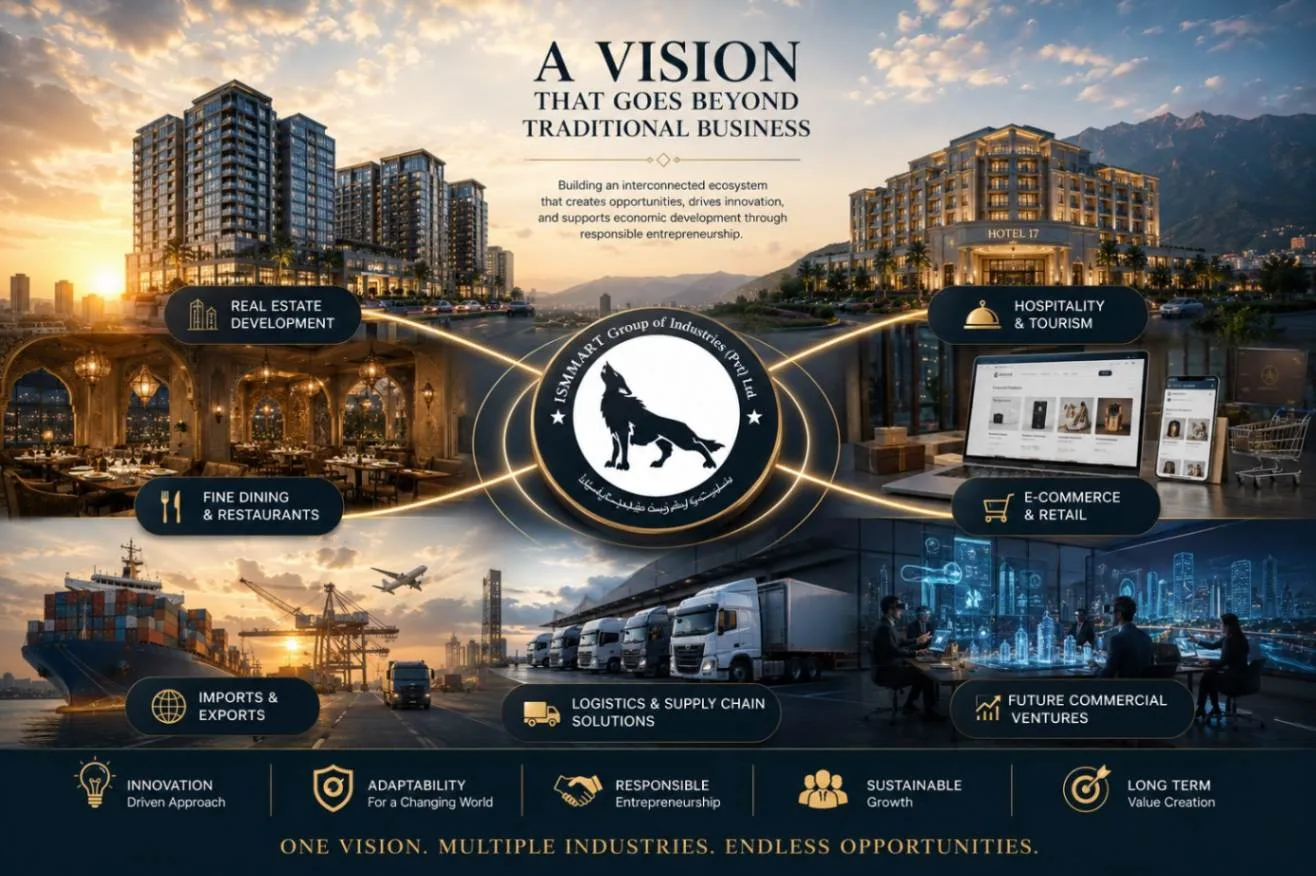
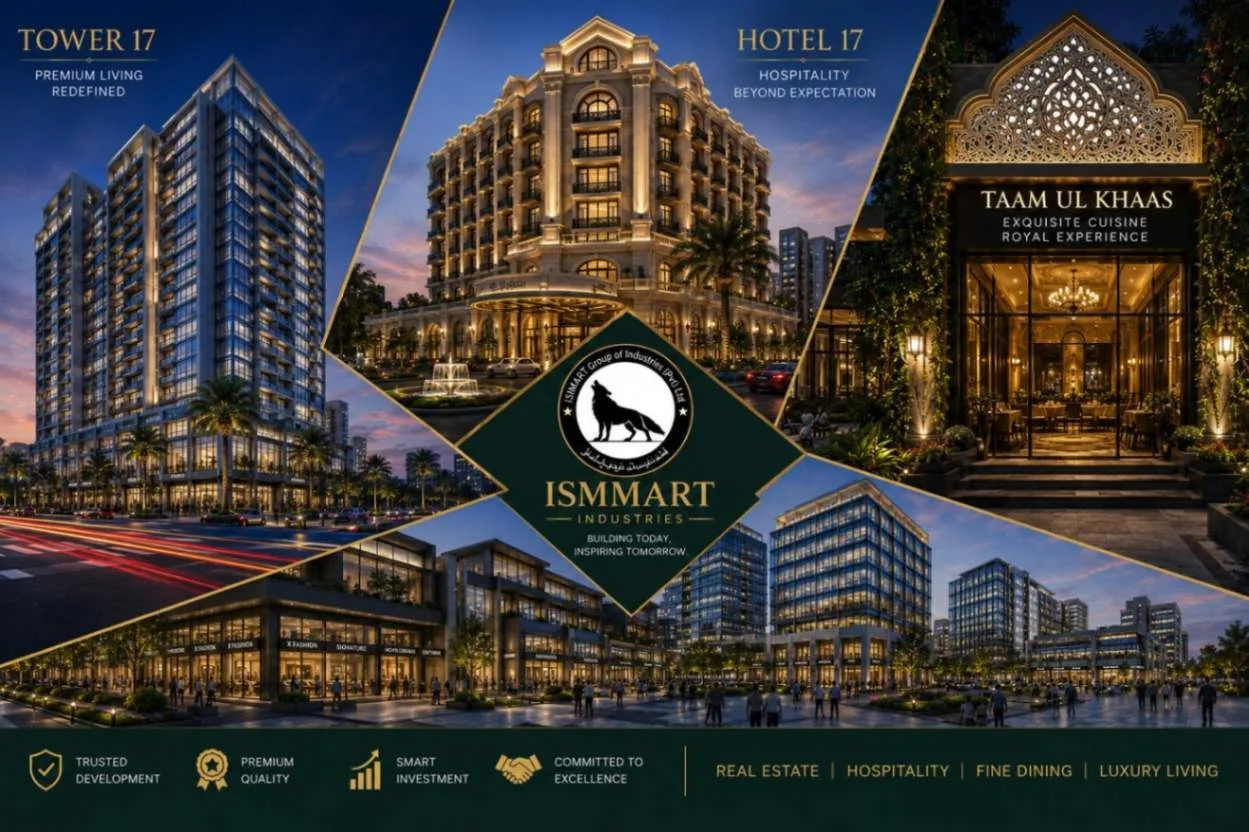
ISMMART Group of Industries carries the tagline “The Choice of Smart People” and it’s built around a simple idea: instead of asking an investor to bet everything on one sector, build real, working businesses across the sectors that actually matter to people’s lives. Today the group operates across nine industries, including Real Estate, Pharma, Hospitality, E-Commerce, Garments, Energy, Cosmetics, Sports, and IT & Electronics.
This matters for this exact guide, because ISMMART isn’t a theory — it’s a working example of what we’ve been describing since the introduction. It has real estate projects going up in Islamabad, a real pharmaceutical arm making medicine, and real restaurants and hospitality projects serving people every day.
Where you’ll actually find ISMMART:
- Global Headquarters: Citadel Tower, Business Bay, Dubai, UAE
- Central Headquarters (Pakistan): 72-West, Blue Area, Islamabad
- Branches in Pakistan: Islamabad, Lahore, and Karachi
- International footprint: the group states a presence across more than 70 locations worldwide, including the UK, Singapore, Nigeria, Qatar, Turkey, and Kuala Lumpur.
The group also talks openly about sustainability building with ESG (Environmental, Social, and Governance) principles in mind, which matters a lot given that Pakistan is one of the countries most affected by climate change. This shows up in how projects like Tower 17 are being planned, with a stated focus on green construction and community investment through the ISMMART Foundation.
One honest note: ISMMART’s website shares its mission, its industries, and its projects clearly, but it doesn’t currently publish a detailed year-by-year ranking or performance table for 2019 through 2023. If you’re seriously considering investing, it’s worth asking their Investor Relations team directly for audited numbers, past project completion history, and any formal awards or certifications that’s simply good practice with any developer or group, ISMMART included, not a red flag specific to them.
7- Apex Estate
Apex Estate is part of ISMMART’s growing real estate portfolio in Pakistan, aimed at investors looking for options beyond the flagship Tower 17 project. For full, up-to-date details on unit types, pricing, and booking, it’s best to reach out directly to the ISMMART sales team through the contact details below — this is a newer addition to the portfolio and we want to give you accurate, current information rather than guesswork.
8– Tower 17 — Faisal Hills, Islamabad
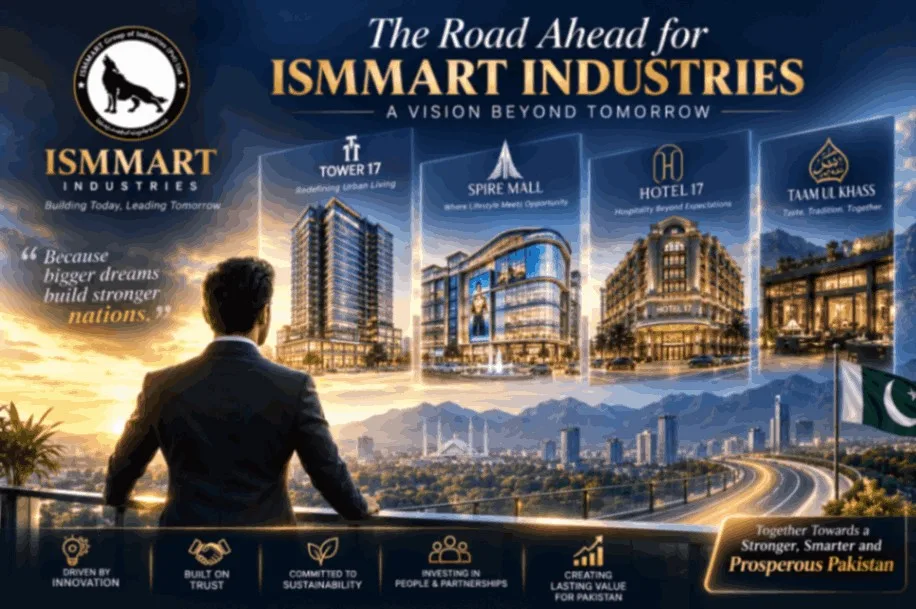
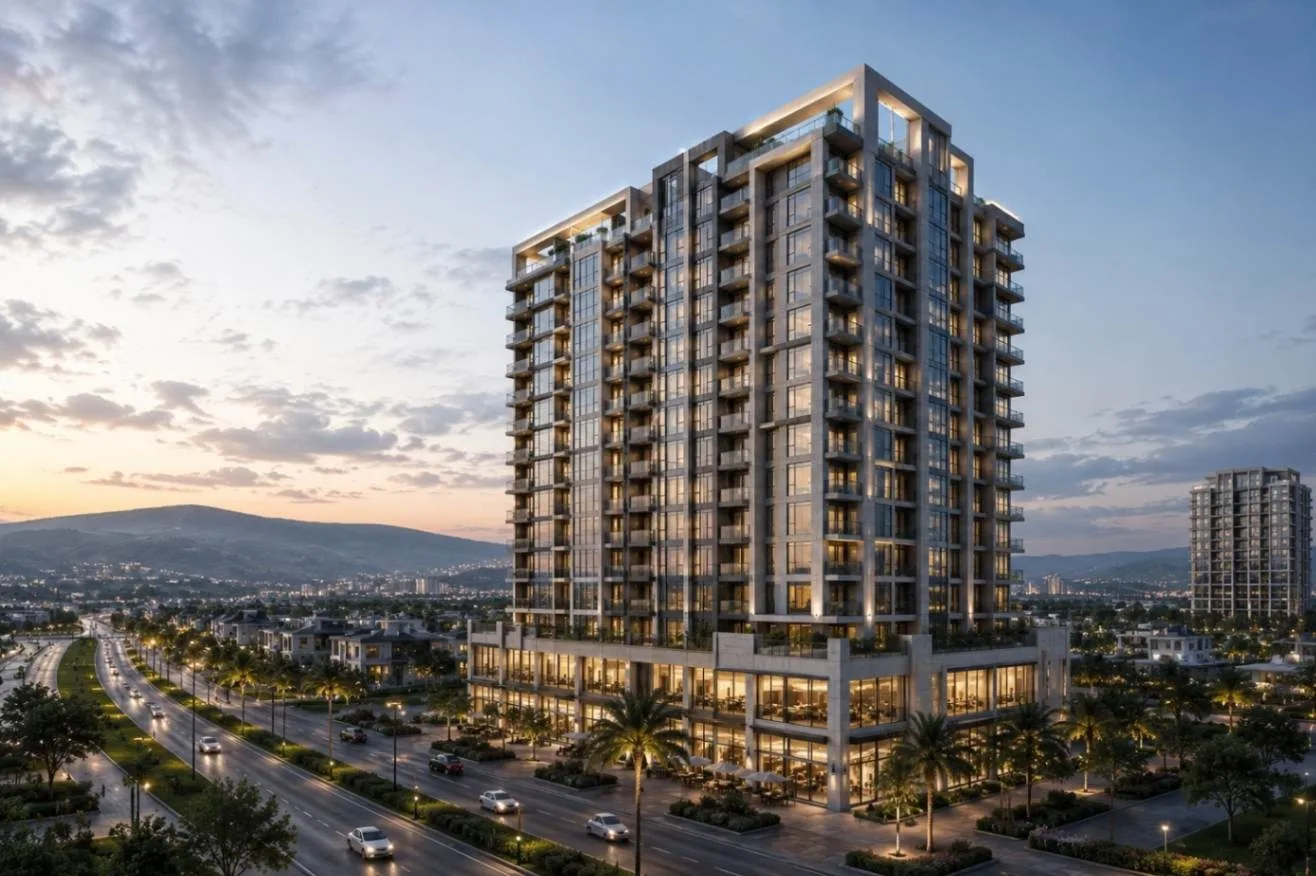
This is ISMMART’s flagship project, and the clearest proof of everything real estate can offer when done right. Located on Faisal Hills Block-B along the Main G.T. Road, close to the Islamabad Expressway and Motorway M-1, with a direct view of the Margalla Hills, it spans 786,425 square feet across 23-plus floors. You can choose from Studio, 1-Bed, 2-Bed, 3-Bed, and Penthouse units, with booking starting from just PKR 1,000,000 and a 20% down payment spread over 4 annual installments. It also comes with a company-backed buyback plan — a rare feature that solves real estate’s biggest weakness, not being able to exit quickly. Possession is targeted for December 2028.
For full pricing, floor plans, and amenities, see the Tower 17 project page.
9- Spire Mall
Spire Mall represents ISMMART’s move into organised commercial and retail space — the kind of project that brings shops, food outlets, and business space together in one location, similar in spirit to the Commercial Hubs the group has also developed in Peshawar and Nowshera. As with Apex Estate, speak directly with ISMMART for the latest floor plans, retail unit pricing, and booking status.
Why this matters for this guide: Tower 17 alone is a real-world example of everything Section 2 described — an easy installment entry starting from PKR 1,000,000, a location in one of the fastest-growing corridors in the country, and a buyback plan built specifically to solve real estate’s biggest weakness, which is not being able to sell quickly when you need to.
10- ISMMART Pharmaceuticals
Under this name, ISMMART makes everyday medicine — heart medication, antibiotics, pain relief, and digestive treatments, both prescription and over-the-counter. Their stated mission is simple: safe, effective medicine, built on integrity and quality. What they’ve built includes modern manufacturing facilities, dedicated R&D labs, a specialised packaging unit, and a stage-by-stage quality control process. This puts ISMMART right inside Pakistan’s pharma growth story — a domestic market that just crossed Rs 1 trillion, with real export demand opening up across Africa, Central Asia, and the Middle East. For anyone wanting healthcare-sector exposure without building a factory from scratch, backing an already-established manufacturer is the realistic way in.
11- ISMMART Hospitality — Taam-ul-Khaas & Hotel 17
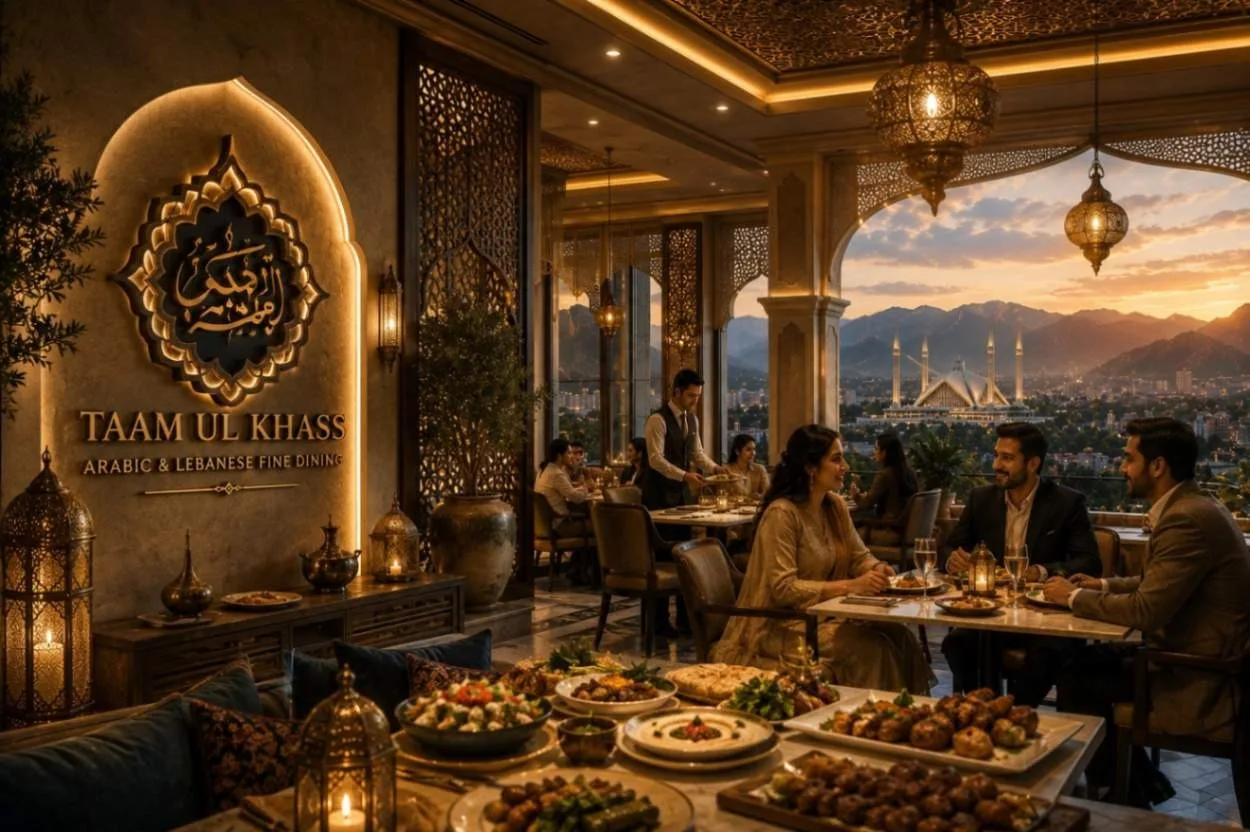
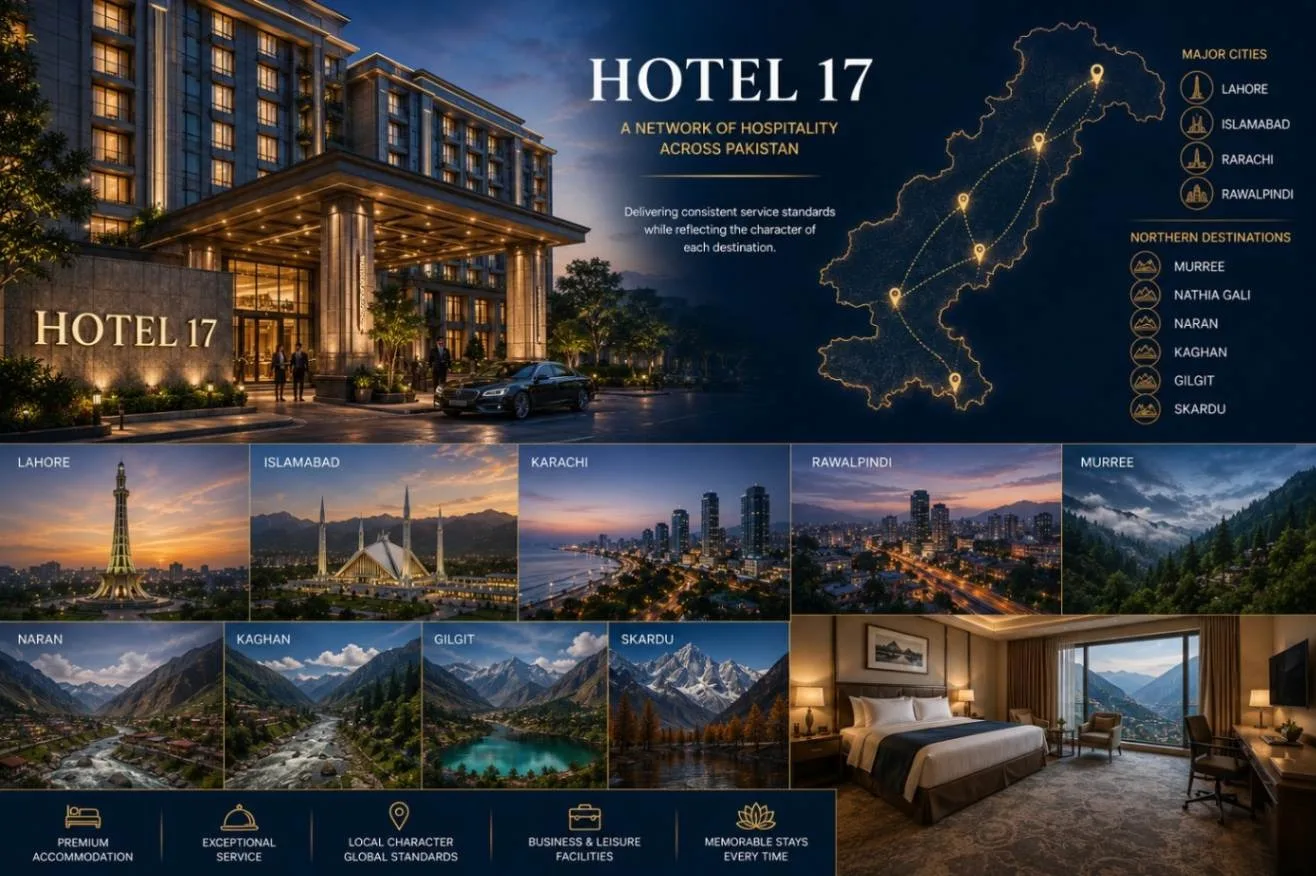
ISMMART’s hospitality business runs on a simple promise: “Make you feel at home.” Taam-ul-Khaas is its dining brand, bringing Turkish, Lebanese, Arabic, and Iranian cuisine together in one place — the kind of authentic, multi-cuisine experience that used to mean traveling abroad. Hotel 17 extends the same Tower 17 brand into hospitality, offering guests a comfortable, modern stay. Together, they tap into Pakistan’s fastest-growing appetite for eating out and quality stays, while spreading the risk that comes with betting on just one restaurant or hotel.
For more details, visit the ISMMART Hospitality page.
12- What Makes ISMMART Different From Other Companies
- It doesn’t ask you to choose just one sector. Most companies specialise in one thing. ISMMART runs real estate, pharma, and hospitality plus six more industries under one name, spreading risk the same way a smart personal portfolio would.
- A real technology system behind its real estate, called REMS, instead of the paper-based, manual process most Pakistani developers still use this matters enormously given how much documentation risk exists in Pakistani property.
- Investor protection built into its flagship project. Tower 17’s buyback plan directly answers real estate’s biggest weakness of not being able to exit quickly, something not every Islamabad developer offers.
- A genuinely international presence. With a global headquarters in Dubai and a stated footprint across 70-plus locations, ISMMART brings an international investor base to its Pakistani projects, which matters a lot for the overseas Pakistani community.
- A clear sustainability commitment, with green building practices referenced specifically for Tower 17, at a time when Pakistan is facing real climate pressure.
- Physical branches in exactly the three cities that matter most Islamabad, Lahore, and Karachi meaning you can actually walk into an office and talk to someone, not just fill out a form online.
Where the group is working best right now:
- Islamabad is clearly the strongest branch at the moment, anchored by Tower 17 and the city’s broader 10 to 12% property growth in 2025.
- Lahore is well positioned because of the city’s strength in pharma manufacturing and its huge appetite for dining out.
- Karachi is positioned around commercial real estate and larger-scale opportunities, given the city’s outsized share of Pakistan’s total economy.
13- Frequently Asked Questions
Is real estate, pharma, or hospitality the best investment in Pakistan?
There isn’t one single winner. Real estate gives you the strongest protection against inflation and works best for long-term, low-effort wealth building. Pharma gives you steady, recession-resistant demand. Hospitality gives you the fastest, most visible return. Smart investors in Pakistan usually hold a mix, not just one.
How much money do I actually need to start investing in real estate in Pakistan? Much less than people assume. Projects like Tower 17 let you book with as little as PKR 1,000,000, with the rest spread across yearly installments a big change from the old days when you needed the full amount ready upfront.
Is it safe for overseas Pakistanis to invest in property back home? It can be, as long as you check land titles properly through the Punjab or Sindh land record authorities, choose developers with clear, verifiable paperwork, and, where possible, pick projects that offer a buyback or guaranteed exit option to solve real estate’s usual problem of being hard to sell quickly.
Why is pharma called a “safe” or “defensive” investment? Because people keep buying medicine even when the economy slows down. Pakistan’s pharma retail sector still grew close to 5% in unit sales even during a tough economic stretch. (Source: Profit by Pakistan Today, citing IQVIA data)
Which city is doing best for real estate right now? Islamabad has the strongest momentum at the moment, with prices up 10 to 12% in early 2025 and land near new roads jumping 20 to 40% in a year. Lahore still holds the highest luxury property prices per square foot, and Karachi leads in commercial real estate because of its sheer size and business activity.
Does ISMMART Group actually operate in all three sectors? Yes. ISMMART Group of Industries runs real estate projects including Tower 17, Apex Estate, and Spire Mall, a pharmaceutical arm called ISMMART Pharmaceuticals, and a hospitality business that includes Taam-ul-Khaas restaurant and Hotel 17 — all from head offices in Islamabad, Lahore, Karachi, and Dubai.
14- Final Verdict
Once you take away the sales talk every sector uses to promote itself, the honest comparison is actually simple: real estate builds your wealth slowly but reliably, and protects you against inflation. Pharma protects your money through hard economic times that would hurt other investments. Hospitality moves the fastest and pays you back the soonest, but it needs your attention.
You don’t have to pick just one. The smarter move is understanding your own timeline, how quickly you might need your money back, and how much you actually want to be involved day-to-day — and then choosing a partner who lets you access whichever sector, or combination of sectors, genuinely fits you. Whether that means booking a unit in Tower 17 for long-term growth in one of Islamabad’s fastest-growing areas, exploring a pharma partnership, or backing a hospitality brand like Taam-ul-Khaas with real, proven footfall, doing it through an already-established group like ISMMART Group of Industries takes away a lot of the guesswork — and a lot of the risk — that comes with figuring it out completely on your own.
Always do your own research, verify documentation directly with the developer, and invest according to your own financial situation. This article is written for information purposes and is not financial advice.