
Top Business Trends Across the UAE to Watch in 2026

The United Arab Emirates (UAE) continues to strengthen its position as one of the world’s most attractive business destinations. With government-led innovation, strategic investments, and a pro-business regulatory environment overseen by the UAE Ministry of Economy, the country is rapidly evolving into a global hub for technology, finance, logistics, and entrepreneurship.

As businesses prepare for 2026, understanding emerging market trends is essential for staying competitive. Whether you’re an entrepreneur, investor, or business owner, keeping pace with these developments can help you identify new opportunities and make informed decisions.

1. Artificial Intelligence (AI) Becomes a Business Necessity

Artificial Intelligence is no longer limited to large technology companies. Businesses across the UAE are increasingly adopting AI to improve customer service, automate operations, analyze data, and boost productivity.

The UAE’s long-term AI strategy aims to position the country as a global leader in artificial intelligence by integrating AI across sectors such as healthcare, finance, education, transportation, and government services.

Businesses investing in AI-powered tools today are expected to gain a significant competitive advantage in the coming years, a pattern consistent with broader corporate strategy insights from McKinsey & Company.

Artificial Intelligence (AI) Becomes a business necessity. UAE's Long-Term AI Strategy

2. FinTech Continues to Transform Financial Services

The UAE remains one of the Middle East’s leading fintech markets. Digital banking, mobile payments, blockchain solutions, and embedded finance are reshaping how consumers and businesses manage money.

According to industry forecasts, the UAE fintech market was valued at approximately USD 1.3 billion in 2025 and is expected to grow significantly over the next decade, driven by digital innovation and supportive regulations.

This growth presents opportunities for startups, investors, and established financial institutions alike.

Digital Banking trends

3. Startup and Free Zone Growth

Entrepreneurship continues to flourish across the UAE, supported by modern free zones, simplified company registration, and investor-friendly policies.

Free zones such as those in Dubai, Abu Dhabi, and other emirates provide benefits including:

  • 100% foreign ownership
  • Streamlined licensing processes
  • Industry-specific business clusters
  • Tax-friendly business environments

These initiatives continue to attract entrepreneurs and multinational companies looking to establish a regional presence.

4. Sustainability Drives Business Strategy

Sustainability has become more than a corporate responsibility, it’s a strategic priority. Businesses are increasingly investing in renewable energy, green construction, sustainable supply chains, and ESG (Environmental, Social, and Governance) initiatives.

Companies that integrate sustainability into their operations are likely to strengthen their brand reputation, attract investors, and meet evolving customer expectations.

Key Takeaway

Businesses that embrace AI, fintech innovation, entrepreneurship, and sustainability will be better positioned to thrive in the UAE’s rapidly evolving economy. These trends are shaping the country’s future and creating exciting opportunities across industries.

5. E-Commerce and Digital Retail Continue to Expand

The UAE has one of the highest internet and smartphone penetration rates in the Middle East, making it an ideal market for e-commerce. Consumers increasingly prefer online shopping, digital payments, and fast delivery services.

Businesses are investing in AI-powered product recommendations, personalized shopping experiences, and omnichannel retail strategies to meet customer expectations. According to Statista’s UAE e-commerce market outlook, retail e-commerce revenue in the UAE is expected to continue growing through 2026 as more consumers embrace digital purchasing habits.

Companies that combine physical stores with strong online platforms will likely maintain a competitive advantage.
New Arrivals Trends with fast delivery

6. Smart Logistics and Supply Chain Innovation

The UAE’s strategic location between Europe, Asia, and Africa makes it a global logistics hub. Ports, airports, and free zones continue to benefit from investments in automation, artificial intelligence, and smart warehousing.

Technologies such as:

  • Warehouse automation
  • Internet of Things (IoT)
  • Blockchain tracking
  • Predictive analytics

are helping businesses improve delivery speed, reduce operational costs, and enhance supply chain visibility.

Government initiatives such as the Dubai Economic Agenda (D33) aim to further strengthen Dubai’s position as one of the world’s leading trade and logistics centers.

7. Digital Healthcare is Transforming Patient Care

Healthcare is rapidly becoming one of the UAE’s fastest-growing sectors. Hospitals and healthcare providers are adopting telemedicine, electronic health records, wearable health devices, and AI-assisted diagnostics.

The government’s continued investment in healthcare infrastructure and medical innovation is creating opportunities for technology providers, pharmaceutical companies, and healthcare startups.

As the population grows and demand for quality healthcare increases, digital health solutions are expected to remain a key business trend throughout 2026.

8. Tourism and Hospitality Remain Strong Growth Drivers

Tourism continues to play a significant role in the UAE economy. Major events, luxury hospitality, cultural attractions, and world-class infrastructure continue to attract millions of international visitors every year.

Businesses in hospitality are increasingly using:

  • AI-powered customer service
  • Smart hotel technologies
  • Contactless check-in systems
  • Personalized travel experiences

These innovations improve customer satisfaction while increasing operational efficiency.

Luxury hospitality with smart check in for comfort

9. Real Estate Evolves Through Technology

The UAE’s property market continues to attract both local and international investors. Developers are increasingly focusing on smart buildings, sustainable communities, and digital property transactions.

Technology such as virtual property tours, AI-powered property management, and blockchain-based documentation is improving transparency and making real estate transactions more efficient.

The combination of population growth, foreign investment, and infrastructure development — trends also reflected in the World Bank’s overview of the United Arab Emirates — is expected to support continued activity in the real estate sector.

Key Takeaway

The UAE’s growth in e-commerce, logistics, healthcare, tourism, and real estate reflects its commitment to innovation and economic diversification. Businesses that leverage technology
and prioritize customer experience will be well-positioned to capitalize on these expanding markets.

Big News: ISMMART Is Bringing Its Real Estate Expertise to the UAE!

As this list makes clear, real estate remains one of the UAE’s strongest growth stories and we are thrilled to announce that ISMMART is stepping into this dynamic market. Building on the success of Tower 17 and Apex23 Developers in Pakistan, ISMMART is expanding its trusted real estate portfolio into the UAE, bringing the same commitment to premium development, transparent investment planning, and long term value creation to one of the world’s most sought after property markets.

This move reflects our belief in the UAE’s continued rise as a global hub for smart, sustainable, and investor friendly real estate and our ambition to grow alongside it.

Stay tuned — more details on ISMMART’s upcoming UAE real estate projects are coming soon

Apex23 developers are bringing the real estate expertise to the UAE

10. Cybersecurity Becomes a Top Business Priority

As businesses continue to digitize their operations, cybersecurity is no longer optional—it’s essential. Organizations across the UAE are increasing investments in cloud security, data protection, identity management, and cyber resilience to safeguard customer information and business operations.

According to IBM’s Cost of a Data Breach Report, organizations with strong cybersecurity measures can significantly reduce the financial impact of data breaches. For businesses operating in the UAE’s rapidly growing digital economy, investing in cybersecurity is becoming a strategic necessity rather than just an IT function.

Cloud Security, Cyber Resilience, Threat Detection, Data Protection, identity Management, Threat Detection, Risk Management all protected all comes under one umbrella

11. The Green Economy Creates New Opportunities

The UAE continues to strengthen its commitment to sustainable economic growth through investments in renewable energy, clean technologies, and green infrastructure. Projects in solar energy, hydrogen, electric mobility, and sustainable construction are creating new opportunities for businesses and investors.

Companies that adopt environmentally responsible practices are increasingly attracting customers, investors, and international partners while improving long-term competitiveness.

12. Upskilling and the Future Workforce

Technology is transforming workplace requirements across every industry. Businesses are investing in employee training, digital skills, artificial intelligence literacy, and leadership development to remain competitive.

Skills expected to remain in high demand include:

  • Artificial Intelligence
  • Data Analytics
  • Cybersecurity
  • Cloud Computing
  • Digital Marketing
  • Project Management

Organizations that continuously invest in workforce development will be better prepared for future market changes.

Investment Outlook for 2026

The UAE’s business-friendly regulations, strategic location, modern infrastructure, and commitment to innovation continue to attract entrepreneurs and international investors, a theme echoed in PwC Middle East’s regional business analysis.

Industries expected to present strong opportunities include:

  • Artificial Intelligence
  • Financial Technology (FinTech)
  • Renewable Energy
  • Healthcare Technology
  • Logistics and Supply Chain
  • E-commerce
  • Tourism and Hospitality
  • Advanced Manufacturing

While every investment carries risk, businesses that align with these long-term growth sectors are likely to benefit from the UAE’s continued economic transformation.

Conclusion

The UAE is entering 2026 with strong economic momentum driven by innovation, digital transformation, sustainability, and strategic government initiatives. Artificial intelligence, fintech, e-commerce, healthcare, logistics, tourism, and green technologies are not simply emerging trends they are becoming the foundation of the country’s future economy.

For entrepreneurs, investors, and business leaders, success will depend on embracing technological innovation, prioritizing customer experience, investing in talent, and remaining adaptable in an increasingly competitive marketplace.

Businesses that recognize these trends early and develop forward-looking strategies will be better positioned to achieve sustainable growth and long-term success in one of the world’s most dynamic economies.

Frequently Asked Questions (FAQs)

Q1. Which industries are expected to grow the fastest in the UAE in 2026? Artificial Intelligence, FinTech, renewable energy, healthcare technology, logistics, tourism, and e-commerce are expected to experience significant growth.

Q2. Why is the UAE attractive for businesses? The UAE offers a strategic geographic location, world-class infrastructure, business-friendly regulations, tax advantages in many free zones, and strong government support for innovation.

Q3. How is AI influencing businesses in the UAE? AI is helping businesses automate operations, improve customer service, analyze data, optimize supply chains, and increase overall productivity across multiple industries.

Final Thoughts

The future of business in the UAE is being shaped by innovation, resilience, and sustainability. Organizations that invest in digital transformation, cybersecurity, workforce development, and environmentally responsible practices today will be well-equipped to thrive in 2026 and beyond. Staying informed about these evolving trends will enable businesses to seize new opportunities and maintain a competitive edge in the global marketplace.


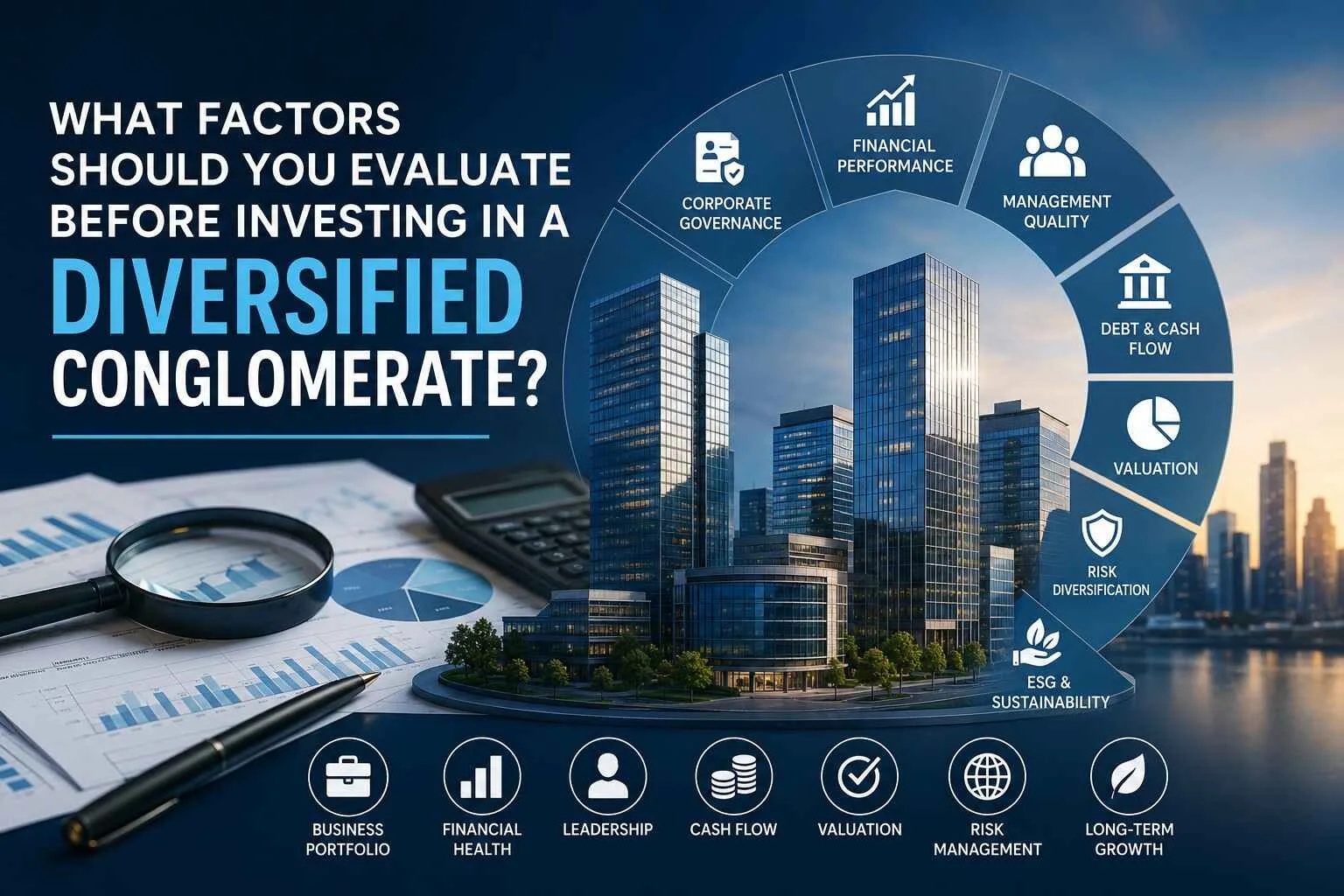
What Factors Should You Evaluate Before Investing in a Diversified Conglomerate?

Introduction

Investing in a diversified conglomerate can be an excellent strategy for investors seeking long-term growth, portfolio stability, and reduced business risk. A diversified conglomerate operates across multiple industries, allowing it to generate revenue from different business segments rather than relying on a single market. Well-known examples include Berkshire Hathaway, Tata Group, Reliance Industries, and Samsung Group.

However, diversification alone does not guarantee success. Investors should carefully analyze a conglomerate’s financial performance, management strategy, and portfolio quality before making an investment decision.

According to a McKinsey & Company analysis of diversification strategy, diversified companies create long-term value only when they allocate capital effectively and actively manage their business portfolio rather than simply owning multiple businesses. Likewise, S&P Global Market Intelligence reports that strong governance and disciplined investment decisions are key characteristics of high-performing conglomerates.

1. Understand the Diversified Conglomerate’s Business Portfolio

The first step is identifying the industries in which the company operates.

Ask yourself:

  • Are the businesses related or completely different?
  • Which divisions generate the highest revenue?
  • Which business contributes the most profit?
  • Are any segments consistently underperforming?

A balanced portfolio with profitable businesses across different sectors generally provides better resilience during market fluctuations.

2. Evaluate the Financial Performance of a Diversified Conglomerate

Financial statements provide valuable insight into the company’s health.

Some important indicators include:

  • Revenue Growth: Consistent growth suggests expanding operations.
  • Net Profit Margin: Higher margins indicate efficient cost management.
  • Return on Equity (ROE): Shows how effectively management uses shareholders’ investments.
  • Earnings Per Share (EPS): Increasing EPS often reflects sustainable business growth.

Investors should compare these metrics over at least the past five years instead of relying on a single year’s performance.

3. Assess the Management Quality of a Diversified Conglomerate

Even a strong portfolio can underperform if management makes poor decisions.

Evaluate whether leadership has:

  • A proven long-term strategy.
  • Transparent communication with shareholders.
  • A successful acquisition history.
  • Effective capital allocation practices.

Companies led by experienced management teams often make better investment decisions and create greater shareholder value over time.

Key Takeaway

Before investing in a diversified conglomerate, understand what the company owns, how it earns money, and whether management has consistently delivered strong financial results. These factors form the foundation of a sound investment decision.

4. Analyze Debt and Cash Flow

Debt can help companies grow, but excessive borrowing may become a financial burden during economic slowdowns. Investors should assess whether the company generates enough cash to comfortably repay its obligations.

Key metrics to review include:

  • Debt-to-Equity (D/E) Ratio: Indicates how much debt is used to finance the business compared to shareholders’ equity.
  • Interest Coverage Ratio: Measures the company’s ability to pay interest on its debt.
  • Free Cash Flow (FCF): Shows the cash remaining after capital expenditures and is an important indicator of financial flexibility.

A company with strong cash flow is generally better positioned to invest in new opportunities, pay dividends, reduce debt, and withstand market volatility.

5. Determine Whether the Diversified Conglomerate Is Fairly Valued

Even an excellent company can be a poor investment if its stock price is too high. Investors should compare the company’s valuation with competitors using common financial ratios.

Some of the most useful valuation metrics include:

Rather than relying on a single ratio, compare these metrics with industry averages and the company’s historical valuation.

6. Watch for the “Conglomerate Discount”

Many diversified companies trade below the combined value of their individual businesses — a phenomenon known as the conglomerate discount.

This discount may occur because:

  • Complex business structures are harder for investors to understand.
  • Poor-performing divisions reduce the value of stronger businesses.
  • Investors may prefer focused companies over diversified ones.

However, a discount isn’t always a warning sign. If management allocates capital efficiently and maintains transparency, it can represent a buying opportunity.
Diversified Conglomerate

7. Evaluate Risk Diversification

One of the biggest advantages of conglomerates is risk reduction through diversification. However, not all diversification is equally effective.

Ask these questions:

  • Are businesses exposed to different economic cycles?
  • Does the company operate in multiple countries?
  • Is revenue generated from various industries rather than one dominant segment?

A diversified revenue base can help stabilize earnings during market downturns and reduce dependence on any single industry.

Key Takeaway

Strong financial health, manageable debt, healthy cash flow, and reasonable valuation are essential indicators of a quality conglomerate. Investors should also determine whether a lower market valuation reflects genuine business weaknesses or simply an undervalued opportunity.

8. Review Corporate Governance of the Diversified Conglomerate

Strong corporate governance helps build investor confidence. Look for companies with an experienced board of directors, transparent financial reporting, ethical business practices, and a clear commitment to protecting shareholder interests.

Investors should also review annual reports — such as Berkshire Hathaway’s annual shareholder letters or Tata Group’s investor disclosures — to understand executive compensation, board independence, and the company’s approach to managing risks.

9. Consider the Dividend History of the Diversified Conglomerate

For income-focused investors, a stable or growing dividend is often a positive indicator of financial strength. While not every successful conglomerate pays high dividends, companies with a consistent dividend history usually demonstrate healthy cash flow and disciplined capital management.

However, dividend payments should be supported by sustainable earnings rather than excessive borrowing.

10. Evaluate ESG and Long-Term Sustainability

Environmental, Social, and Governance (ESG) factors are becoming increasingly important in investment decisions. Companies with strong ESG practices often experience better risk management, improved corporate reputation, and greater investor confidence.

Review the company’s sustainability reports to understand its environmental initiatives, employee welfare, governance standards, and long-term strategic goals.

Final Investment Checklist

Before investing in a diversified conglomerate, ask yourself:

  • ✔ Does the company have a diversified and profitable business portfolio?
  • ✔ Are revenue and earnings growing consistently?
  • ✔ Is debt at a manageable level?
  • ✔ Does the company generate strong free cash flow?
  • ✔ Is the stock reasonably valued?
  • ✔ Does management have a strong track record?
  • ✔ Are corporate governance and ESG practices transparent?
  • ✔ Does the investment align with your financial goals and risk tolerance?

If most of these questions can be answered positively, the company may be worth further consideration.

Conclusion

Diversified conglomerates can offer investors stability, reduced business risk, and long-term growth opportunities. However, successful investing requires more than simply choosing a well-known name. Investors should carefully examine the company’s financial performance, business diversification, debt management, leadership quality, valuation, governance, and sustainability practices before making any investment decision.

No investment is entirely risk-free, but thorough research and disciplined analysis can significantly improve your chances of making informed decisions. By focusing on both quantitative metrics and qualitative factors, investors can better identify conglomerates that are positioned to create long-term shareholder value.

Commercial vs Residential Property: Which Is the Better Investment in Pakistan?

Every property investor in Pakistan eventually asks the same question: shop or house? Office or apartment? Both are real, both are proven, and both can make you money  but they work in completely different ways, and mixing them up is exactly how a lot of investors end up disappointed with returns they didn’t fully understand going in. This guide breaks down commercial and residential property side by side, using real Pakistani numbers, so you can see clearly which one actually fits your goals whether that’s steady, passive growth, or faster, active income.

Table of Contents

  1. What Is Commercial Property?
  2. What Is Residential Property?
  3. Tax on Commercial vs Residential Property
  4. Risk and Reward
  5. Market Research & Location: How It Affects Value
  6. Which One Should You Choose?
  7. Capital Appreciation and Exit Strategy
  8. The Role of Planned Communities
  9. A Quick Word on ISMMART Group of Industries
  10. Tips Before You Choose
  11. FAQs
  12. Conclusion

1. What Is Commercial Property?


Commercial property is built for business use shops, offices, plazas, retail units, warehouses. Its value depends on footfall, business activity, and how many companies want to operate from that location. In Pakistan, commercial property typically delivers 10–12% ROI, almost double residential returns in the same city. (Source) The sector has also been expanding fast commercial real estate grew by 34.2% in 2022 alone, outpacing the overall real estate sector’s growth of 25.5% that same year, driven largely by rising demand from software companies, financial firms, and retail brands looking for proper office and shop space. (Source) In 2022 alone, commercial real estate expanded by 34.2%, well ahead of the overall property sector’s growth of 25.5% that same year a sign of just how fast investor interest in this category has been growing. (Source)

Pros Cons
Higher rental yield (8–12%) Higher entry cost
Fixed, annually increasing rent contracts Longer vacancy periods possible
Strong demand from businesses, offices, retail brands Needs active management
Faster monthly cash flow More sensitive to economic slowdowns

2. What Is Residential Property?

Residential property is built for people to live in houses, apartments, plots for homes. Its value depends on livability: location, security, schools, and connectivity. Residential property in Pakistan typically delivers 5–7% annual returns, with rental yields often closer to 3–4%. (Source) Demand stays strong regardless of economic conditions, mainly because Pakistan’s population is heading toward 250 million by 2030 while the country is already short close to 10 million housing units a gap that keeps residential property in steady, long-term demand no matter what the wider economy is doing. (Source) Even so, it remains the sector most Pakistanis actually invest in first, largely because Pakistan’s housing shortage of nearly 10 million units keeps genuine, long-term demand behind every residential purchase.

Pros Cons
Lower entry cost, easier installment plans Lower rental yield
Easier to get a loan or mortgage for Rent often stays flat for years
Lower risk, steady demand Slower cash flow — mostly appreciation-based
Can be used personally, not just rented Selling takes longer

3. Tax on Commercial vs Residential Property

Both property types are taxed by the FBR, but not identically:

  • Capital Gains Tax (CGT): a flat 15% for filers on properties bought after July 2024 applies equally to commercial and residential. (Source)
  • Capital Value Tax (CVT): 2% of property value, paid by the buyer, on both types. (Source)
  • Federal Excise Duty (FED): 5%, but here’s the difference it applies to every commercial property purchase, while for residential property it only applies to the first owner at booking. (Source)
  • Rental income tax: for commercial property, the FBR assumes a minimum fair rent of 4% of the property’s assessed value for tax purposes meaning commercial rental income is taxed on a higher assumed baseline than residential. (Source)

In short: commercial property carries a slightly heavier, more consistent tax load, while residential property is lighter on tax for repeat owners but both are simple to plan for once you know the numbers upfront.

4. Risk and Reward

Commercial Residential
Reward potential Higher (10–12% ROI) Moderate (5–7% ROI)
Income speed Fast — rent starts quickly Slow — appreciation-driven
Risk level Higher — vacancy hits income directly Lower — always in demand
Financing ease Harder — banks lend more cautiously Easier — mortgages and installment plans are widely available
Best suited for Investors chasing active income Investors wanting stability

5. Market Research & Location: How It Affects Value

Location changes everything, but it changes each property type differently.

For commercial property, location is about footfall and business activity. A shop on a busy Islamabad boulevard or a Lahore commercial hub earns far more than an identical shop on a quiet side street because its value comes from the customers walking past it every day. Areas like Blue Area in Islamabad, DHA and Gulberg in Lahore, and Clifton and Saddar in Karachi consistently command the highest commercial rents in the country, precisely because of the sheer volume of daily business activity around them.

For residential property, location is about livability. Proximity to schools, security, mosques, and clean infrastructure drives value which is why gated, planned communities in Islamabad and Lahore have consistently outperformed older, unplanned residential areas in recent years.

Feature Commercial Property Residential Property
Value driver Footfall & business activity Livability & safety
Best locations Main boulevards, business hubs Gated communities, planned schemes
Income type Active rental income Long-term appreciation
Tenant type Businesses, offices, shops Families, individuals

6. Which One Should You Choose?

  • Choose commercial if you have some capital already, want faster income, and can handle vacancy risk.
  • Choose residential if this is your first property, you want lower risk, and you prefer stability over speed.
  • Choose a mixed-use project if you want a bit of both without picking a side too early.

7. Capital Appreciation and Exit Strategy

Commercial property tends to appreciate faster in booming business areas but can also stall if the local business scene slows down exiting depends heavily on finding another investor, not a homebuyer, which can take longer in a weak market.

Residential property appreciates more steadily and is easier to exit, since the buyer pool is larger everyone from families to first-time buyers is a potential buyer, not just investors. This is why residential property is often seen as the “safer exit,” even if the upside is smaller.

8. The Role of Planned Communities

Planned communities gated housing schemes with proper roads, security, and utilities have become a major value driver for both property types. For residential buyers, they offer safety and a better quality of life. For commercial investors, a planned community with a growing residential population nearby guarantees a built-in customer base for shops and offices from day one. This is exactly why mixed-use developments residential towers with retail floors built in — have become one of the most in-demand formats in Pakistani real estate today.

9. A Quick Word on ISMMART Group of Industries

ISMMART Group of Industries offers both sides of this comparison under one roof. Its flagship project, Tower 17 in Faisal Hills, Islamabad, includes residential apartments starting from PKR 1,000,000, alongside three levels of retail and commercial space giving investors access to both residential stability and commercial-style income within the same development. Full details are on the Tower 17 project page.

10. Tips Before You Choose

  1. Match the property to your goal — income now, or growth later.
  2. Check the exact location’s footfall or livability, not just the general area.
  3. Factor in tax differences before comparing final returns.
  4. Verify documentation CDA/SECP approvals, ownership titles before paying anything.
  5. Consider a mixed-use project if you’re not ready to fully commit to one side.

11. FAQs

Which gives a higher return, commercial or residential? Commercial typically delivers higher ROI (10–12%) compared to residential (5–7%), but with more risk and a higher entry cost.

Which is easier to sell? Residential property, because the buyer pool is larger it includes families, not just investors.

Is tax higher on commercial property? Slightly, yes commercial property always pays the 5% Federal Excise Duty, while residential only pays it on the first purchase.

Can I invest in both? Yes, and many investors do often through mixed-use projects that include both residential and commercial space in one development.

Does location matter more for one type than the other? Yes commercial property is far more location-sensitive, since its value depends almost entirely on footfall. A residential property can still hold solid value in a quieter area, as long as it’s safe and well-connected.

12. Conclusion

There’s no universal winner between commercial and residential property in Pakistan — only the right fit for your budget, risk tolerance, and timeline. Commercial rewards patience with higher income; residential rewards patience with stability and easier resale. Understanding both, with real numbers instead of guesswork, is what actually leads to a smart investment decision.

Always verify documentation and current pricing directly with any developer, and consult a tax advisor for your specific situation. This article is for information purposes and is not financial advice.

How to Verify an Investment Management Company’s Credibility Before Doing Business

There’s a specific feeling everyone in Pakistan knows. You’ve found a company that looks perfect, the website is polished, the sales rep is friendly, the offer sounds almost too good. And right underneath the excitement, there’s a small, quiet voice asking: “But is this actually real?”

That question isn’t paranoia. It’s a good instinct. And the good news is, you don’t have to guess anymore. Pakistan actually has a clear, simple system for checking whether a company is genuine — you just need to know where to look. This guide walks you through it, step by step, in plain language, so the next time you’re about to sign a contract, book a property, or hand over your hard-earned savings, you can do it with real peace of mind instead of crossed fingers.

Why This Small Habit Matters So Much

Think about it from a human angle. When you trust a company with your money, you’re really trusting them with something bigger a plan, a dream, maybe your family’s future. Every year, people across Pakistan hand over savings to companies that looked convincing on the surface but had nothing solid behind them. It’s not that people are careless. It’s that most of us were never taught how to check. We rely on gut feeling, on what a friend said, on how nice the office looked.

Here’s the shift in mindset that changes everything: a genuinely good company wants you to verify it. A company with nothing to hide will happily point you to its registration number, its tax records, its approvals. It’s only the companies with something to hide that get uncomfortable when you ask questions. So verifying a company isn’t an act of distrust, it’s simply good practice, and any solid, established business will respect you more for doing it.

Step One: Check the Government Records (This Is Easier Than You Think)

Pakistan has real, working institutions built exactly for this purpose. Here’s how each one helps you, in order of how often you’ll actually use them.

SECP — Confirm the Company Legally Exists

The Securities and Exchange Commission of Pakistan (SECP) is the main body that registers companies in Pakistan. As of 2025, there are over 180,000 registered companies in the country. (Source) Every registered company gets a CUIN (Company Incorporation Number), and you can search any company’s name for free on the SECP eServices portal. Within seconds, you’ll see whether the company is legally incorporated, when it was formed, whether it’s active, and its registered office address. If a company can’t be found there and claims to be a private limited company, that’s your cue to ask more questions.

FBR — Confirm the Company Pays Its Taxes

The Federal Board of Revenue (FBR) issues every legitimate business an NTN (National Tax Number). You can check any company’s NTN and see whether they’re on the Active Taxpayer List (ATL) completely free, no login needed through the FBR’s online verification portal. A company that files its taxes regularly and appears on the ATL is telling you something important: it’s playing by the rules, in a system where doing so is completely visible and checkable by anyone. 

CDA — Confirm a Real Estate Project Is Actually Approved

If you’re specifically looking at property or a construction project in Islamabad, the Capital Development Authority (CDA) is your best friend. CDA approves housing and commercial schemes in two stages first the Layout Plan (LOP), then the No Objection Certificate (NOC) and only issues these once a project meets legal, safety, and infrastructure requirements. (Source) You can check any project’s exact approval status directly on CDA’s website before paying a single rupee in booking or token money. A project with a clear LOP and NOC gives you a real legal foundation to build your investment on.

NAB — A Quiet but Reassuring Check

The National Accountability Bureau (NAB) is Pakistan’s anti-corruption body, responsible for investigating financial fraud and corruption across public and private sectors. (Source) NAB doesn’t hand out “certificates” the way SECP or FBR do but a company (and its leadership) with no NAB inquiries or cases attached to their name is a genuinely reassuring sign. It simply means nothing has raised a red flag with Pakistan’s accountability system.

Put simply: if a company is verifiable through SECP, active with FBR, and where relevant properly approved by CDA, with a clean record and no accountability concerns, that’s about as solid a legal foundation as a business can have in Pakistan. At that point, anyone can comfortably do business with them.

Step Two: Look Beyond the Paperwork the Human Side of Trust

Government records tell you a company is legal. They don’t tell you whether a company is actually good to work with. For that, you need to look at the human story behind the business.

Background and history. How long has this company actually been operating? Do they have real, physical offices you can walk into, or just a phone number and a Facebook page? A company with a visible footprint offices, ongoing projects you can literally go and see has already put real skin in the game.

Customer reviews and word of mouth. This is honestly one of the most powerful signals there is. Search the company’s name along with words like “reviews” or “experience.” Look at what past customers say, not just on the company’s own page, but on independent platforms and social media. A pattern of happy, long-term customers speaks louder than any advertisement ever could.

How they treat their customers. Pay attention to how a company responds when something goes wrong. Do they respond to messages? Do they resolve complaints, or go quiet? A company that genuinely values its customers will have systems in place a proper support team, clear contact details, transparent policies because it knows that trust, once built, is worth protecting.

Customers’ past experience. If a company has delivered on past promises finished a project on time, followed through on what they said they would do that history becomes one of its biggest assets. It’s also exactly why established groups with a visible, ongoing track record tend to earn more social trust over time than newer, unproven names.

A Real Example: What This Looks Like in Practice

ISMMART Group of Industries is a good example of what this whole verification process looks like when you actually walk through it. According to the company’s own official LinkedIn page, ISMMART Group of Industries is described as a group of six companies registered under SECP. (Source) It operates with real, physical offices a Central HQ in Islamabad, a global office in Dubai’s Business Bay, and branches in Lahore and Karachi and it has ongoing, visible projects like Tower 17 that anyone can look up, visit, and follow the progress of, rather than a business that exists only online. It also lists direct contact details publicly (+92 337 330 9872, businesses@ismmartindustries.com), which is exactly the kind of transparency a trustworthy company should offer.

Here’s the most important part, and the same advice we’d give about any company: don’t just take this article’s word for it, or the company’s own word for it either. Search ISMMART’s name on the SECP portal yourself. Check the FBR taxpayer list. Look at customer reviews online. Ask about Tower 17’s approval status directly with their team. That’s not a lack of confidence in any one business that’s simply what smart, informed customers do everywhere, and any credible company will welcome the question rather than avoid it.

Your Quick Credibility Checklist

Next time you’re about to do business with any company in Pakistan, run through this in five minutes:

  1. Search the company on the SECP eServices portal confirm it’s legally registered and active.
  2. Check their NTN and ATL status on FBR’s portal confirm they’re a compliant taxpayer.
  3. For real estate specifically, check CDA’s approval status for the exact project and phase.
  4. Search their name plus “reviews” and read what real customers are saying.
  5. Visit their physical office if you can, or at least confirm it exists.
  6. Ask them directly for documentation registration certificates, NOCs, tax records. A confident, transparent company will hand these over without hesitation.

The Warm Truth About Trust

Verifying a company isn’t about being suspicious of the world it’s about giving your money, your time, and your trust to the businesses that have genuinely earned it. The best part? Once you know these few simple steps, you’ll never have to rely on gut feeling alone again. You’ll walk into every business decision with confidence, clarity, and the quiet peace of mind that comes from knowing exactly who you’re dealing with.

And honestly, that’s good for everyone for you, and for every company out there doing things the right way, who has nothing to hide and everything to show.