
ISMMART Group of Industries: A New Chapter of Resilience, Responsibility and Growth

From challenging times to a renewed vision — ISMMART Group is moving forward with responsibility, determination and a commitment to building a stronger future.

Every organization experiences moments that test its strength, leadership and ability to adapt.

For ISMMART Group of Industries, the past few years have been a challenging yet transformative period. The Group and its associated businesses faced significant legal and regulatory matters, public scrutiny and difficult circumstances.
But difficult chapters do not have to define the future.

Today, ISMMART Group is entering a new chapter — one focused on responsibility, structured processes, customer engagement, employment opportunities, business development and long-term growth.

The journey continues with renewed determination.

Read More Blogs

Facing Challenges with Courage and Responsibility

When legal and institutional challenges emerged, ISMMART Group and its leadership continued to face the relevant processes rather than stepping away from them.
The Group’s approach has been to engage with the relevant institutions and pursue matters through the legal and institutional framework of Pakistan.

For any organization, challenging circumstances require patience, responsibility and a willingness to work through established procedures.

ISMMART Group believes that the right way forward is through lawful processes, institutional engagement and responsible resolution.
The experience of recent years has also provided an opportunity for the Group to review its systems, strengthen its operations and develop a more structured approach toward its customers, employees and stakeholders.

A Structured Path Toward Resolution

On 1 April 2026, ISMMART Group issued a Public Notice/Announcement regarding the resolution mechanism reached with the National Accountability Bureau (NAB).
According to the our published notice, the Group had addressed all matters concerning NAB through the appropriate legal and judicial channels, with the resolution formally approved and executed by the relevant authorities. The notice further communicated that verified claims would be processed according to the applicable NAB rules and procedures, and that individuals with legitimate claims could approach NAB for verification and settlement through the prescribed mechanism.

This public communication marked an important step toward providing clarity to stakeholders.

We also shared the notice publicly through leading newspapers of Pakistan, including Jang, The News International, Dawn, Express News, and The Express Tribune, ensuring that the company’s position and the approved mechanism were made available to the wider public.

For ISMMART Group, responsibility means more than making statements.
It means participating in structured processes, communicating with stakeholders and continuing to work toward a responsible future.

Clickable newspaper links to place on those names

Turning Experience into a Stronger Future

The past has provided valuable lessons.

Those lessons are now becoming part of ISMMART Group’s future direction.

The Group is focusing on strengthening its organizational structure, improving communication, expanding professional teams, developing businesses and creating better systems for customer engagement.

The objective is not simply to move forward.

The objective is to move forward better.

That means:

  • Better communication
  • Stronger internal systems
  • Professional customer support
  • Responsible business practices
  • Greater operational discipline
  • Employment opportunities
  • Sustainable business development
  • Long-term value creation

The Group’s current digital presence reflects this renewed direction, with ongoing 2026 updates, customer communications, recruitment activities, business initiatives and project developments.

A Growing Business Presence Across Pakistan

ISMMART Group is continuing its business activities through a growing professional presence in major cities of Pakistan.
Today, the Group maintains operations and teams across Islamabad, Lahore and Karachi, supporting its different business functions and customer requirements.
With a growing workforce of professionals working across these locations, the Group is focused on creating a productive environment where people can develop their skills, build careers and contribute to the organization’s next phase of growth.

Our Offices in Pakistan

  • Islamabad — Head Office

    APEX23 Developers – Pakistan Head Office : Office 2, 3rd Floor, Benazir Plaza, Jinnah Avenue, Block H, G-7/2, Blue Area, Islamabad, PakistanIslamabad serves as an important center for the Group’s management, coordination, business development and corporate operations.

  • Lahore — Regional Office

    ISMMART Group – Lahore Regional Office : 90-B, G-1, Central Tower-1, Hali Road, Gulberg II, Lahore, Pakistan
    The Lahore Regional Office supports the Group’s regional business activities, customer engagement and professional teams
    The Lahore office has also remained an important part of the Group’s renewed operational presence, with employee activities and professional development initiatives continuing during 2026.

  • Lahore — Second Office

    ISMMART Group – Lahore Office: First Capital Tower, Floor #12, College Road, Block H, Gulberg 2, Lahore, PakistanThe additional Lahore office provides further operational capacity for the Group and its growing teams.

  • Karachi — Regional Operations

    2nd floor Building number 27, lane 2, ittehad commercial, DHA phase 6, KarachiISMMART Group also maintains a professional presence in Karachi, supporting customers, teams and business activities in the South region.
    The Group has continued customer facilitation and regional activities in Karachi during 2026, including team visits and customer-related initiatives.

Building Opportunities Through People

A company’s real strength is its people.

Every employee who reports to work, every professional who serves a customer, every team member who solves a problem and every department that works toward a common objective contributes to the organization’s future.

ISMMART Group is committed to developing a professional workforce and creating opportunities for people across its operations.

With teams working across Islamabad, Lahore and Karachi, the Group continues to focus on professional development, teamwork and organizational growth.

We believe that when people grow, organizations grow with them.

A New Direction in Real Estate

Real estate remains an important part of ISMMART Group’s business vision.
Through APEX23 Developers, the Group is continuing to develop its presence in the real estate sector, including Tower 17, a project featured on ISMMART’s official platform.
Real estate is not simply about constructing buildings.
It is about creating opportunities, developing communities and providing spaces that can contribute to people’s aspirations.
The Group’s renewed approach is centered on professional project development, customer communication, improved operational systems and long-term business sustainability.

Beyond Real Estate — A Diversified Business Vision

ISMMART Group’s vision extends beyond a single industry.
The Group’s official platform currently presents activities across multiple sectors, including:

  • Real Estate
  • Hospitality
  • Energy
  • IT & Electronics
  • Pharmaceuticals
  • Garments
  • Cosmetics
  • Sports
  • E-Commerce

This diversified approach reflects the Group’s broader ambition to participate in different areas of Pakistan’s growing economy.
The future is about building businesses that can create value, generate employment and contribute positively to the communities in which they operate.

Trust Is Earned Through Actions

We understand an important principle:

  • Trust cannot be demanded. It has to be earned.
  • And earning trust takes time.
  • It requires consistent communication.
  • It requires responsible action.
  • It requires listening to customers.
  • It requires improving systems.

And it requires demonstrating commitment through actions rather than words alone.
ISMMART Group’s next chapter is therefore focused on building confidence through continued work, improved communication and responsible business practices.

We do not expect the future to be built in a single day.
We believe it is built one responsible decision at a time.

Learning from the Past, Building for Tomorrow
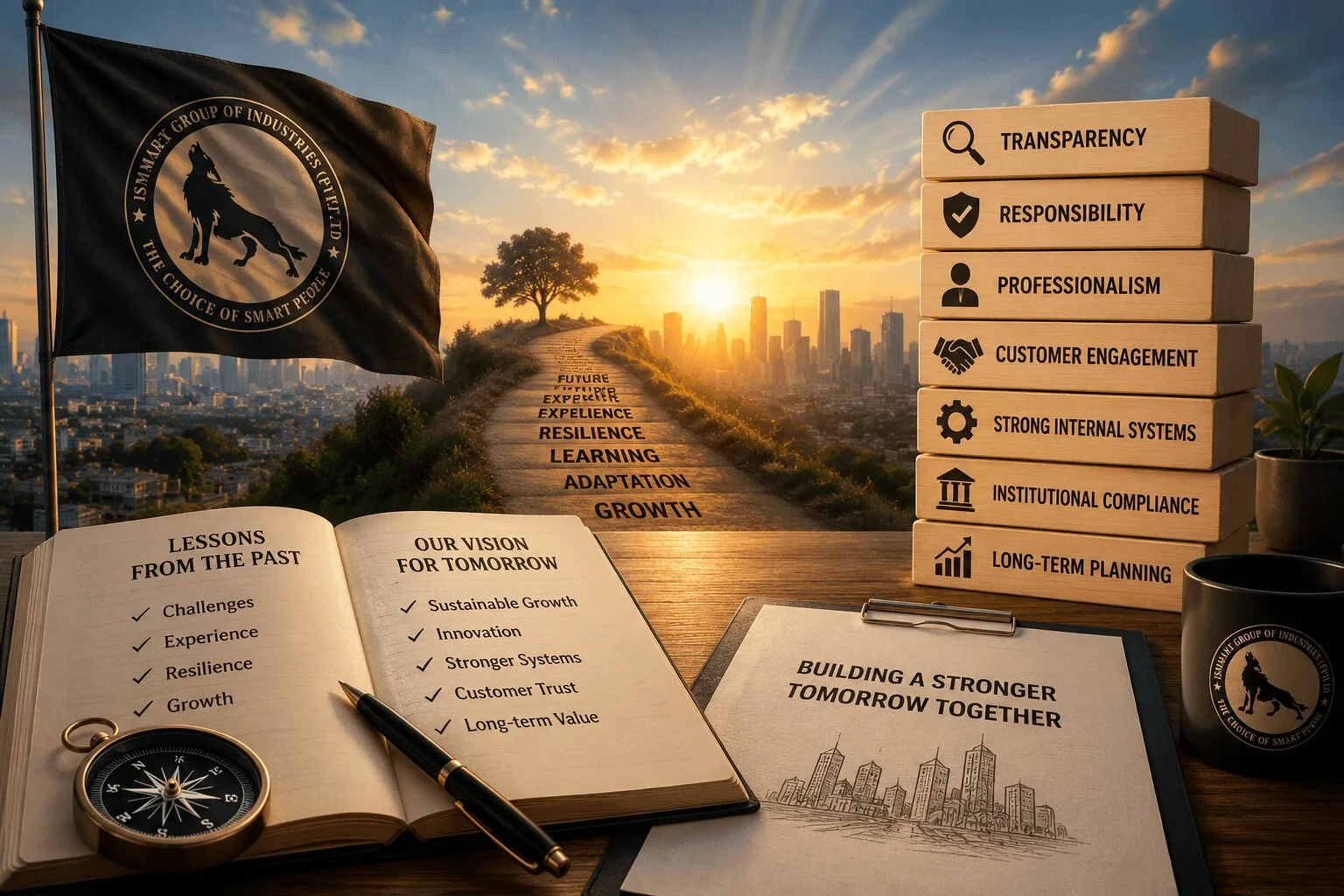
ISMMART Group with valuable lessons

The experiences of recent years have provided ISMMART Group with valuable lessons.
Those lessons have strengthened the importance of:

  • Transparency.
  • Responsibility.
  • Professionalism.
  • Customer engagement.
  • Strong internal systems.
  • Institutional compliance.
  • Long-term planning.

These principles are becoming an important part of the Group’s future direction.
The goal is to create an organization that is more structured, more professional and better prepared for the changing needs of customers and the business environment.

ISMMART Group — Moving Forward

Today, ISMMART Group stands at the beginning of a new chapter.

  • A chapter built on experience.
  • A chapter shaped by challenges.
  • A chapter strengthened by responsibility.
  • And a chapter driven by hope and determination.

From Islamabad to Lahore and Karachi, our teams continue to work.
From real estate to hospitality, technology, energy, pharmaceuticals and other sectors, our business vision continues to evolve.
From our employees to our customers and stakeholders, people remain at the center of our journey.

  • We know that rebuilding confidence is a process.
  • We know that growth requires patience.
  • And we know that the future must be earned through consistent effort.

That is why our focus is forward.

Our Vision for the Future

ISMMART Group’s vision for the coming years is built around a simple philosophy:
Build Better.
Serve Better.
Communicate Better.
Work Responsibly.
Create Opportunities.
Move Forward.

We believe Pakistan has enormous potential.
We believe its people deserve opportunities.
We believe businesses have a responsibility to contribute to economic activity and employment.

And we believe that organizations can emerge stronger when they learn from difficult experiences and use those lessons to improve.

A New Chapter Begins

The story of ISMMART Group is still being written.
The past is part of our experience.
The present is our responsibility.
But the future is our opportunity.

We are moving forward with renewed determination, professional teams, growing operations and a commitment to building a stronger organization.
ISMMART Group of Industries is not looking backward.

We are looking ahead.
Ahead toward stronger businesses.
Ahead toward better customer engagement.
Ahead toward new opportunities.
Ahead toward professional growth.
Ahead toward a more responsible and sustainable future.

ISMMART Group of Industries
The Choice Of Smart People
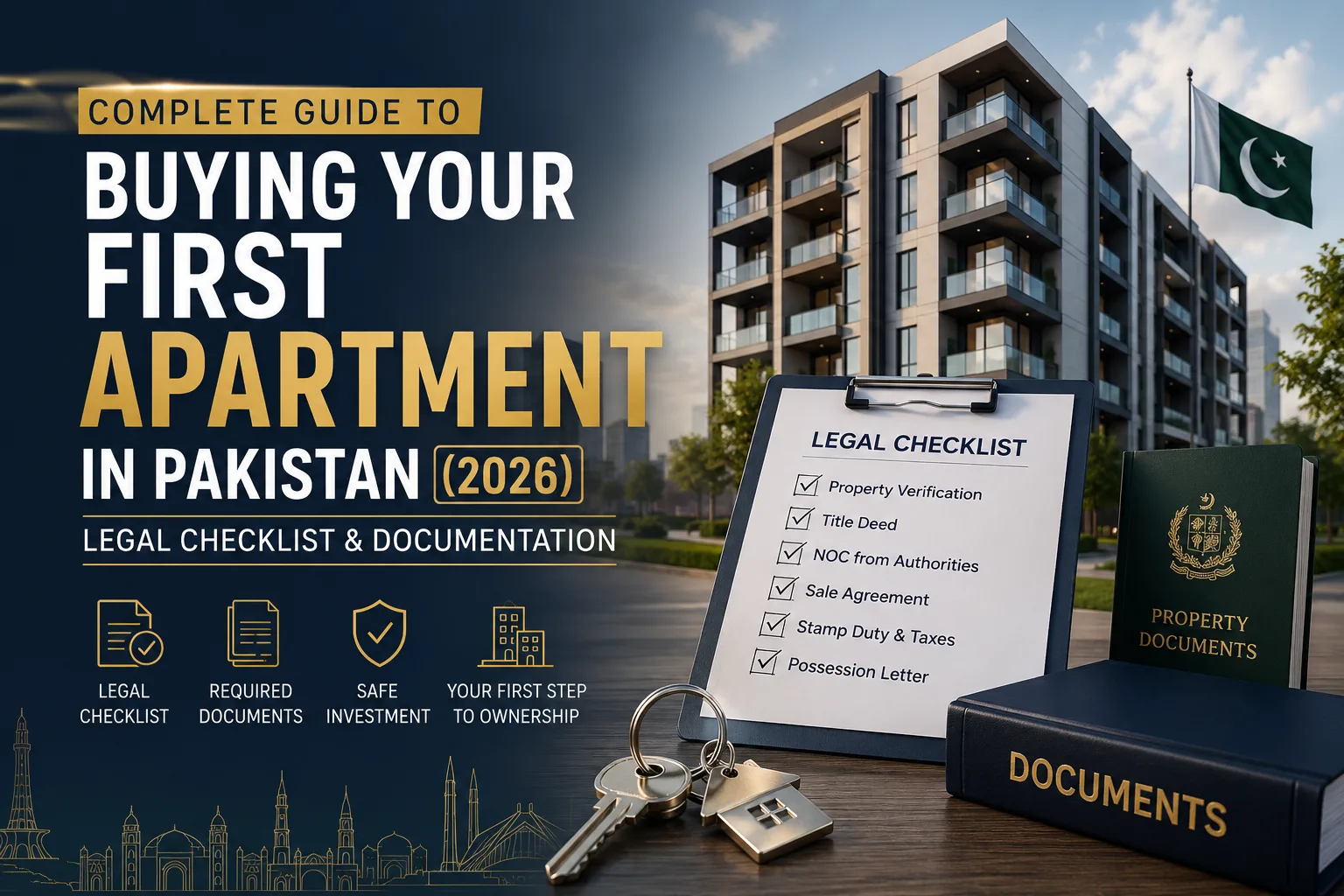
Complete Guide to Buying Your First Apartment in Pakistan (2026): Legal Checklist & Documentation

Introduction

Buying your first apartment is one of the biggest financial decisions you’ll make and buying an apartment in Pakistan comes with its own set of questions that generic international guides simply don’t answer. What documents actually prove clear ownership? What taxes will you really pay in 2026? Can a non-filer or an overseas Pakistani legally buy? And how do you avoid the fraud cases that make headlines every year?

This guide is the apartment buying checklist that answers all of it in one place combining practical buying steps with the legal and tax specifics that apply in Pakistan today, linking directly to the official government portals you’ll actually need, so you can move from “just looking” to “confidently owning” without the guesswork.

If you’re specifically looking in Islamabad, this checklist is also the exact standard ISMMART Group of Industries holds its own projects to every unit we offer comes with verified CDA approvals and transparent documentation from day one, which is exactly what this guide will teach you to check for yourself before buying from anyone.

Table of Contents

  1. Who Can Buy an Apartment in Pakistan?
  2. Understand Your Buying Options
  3. Plan Your Budget Including the Costs Nobody Mentions
  4. Financing Your Apartment: Bank Loans & Roshan Apna Ghar
  5. Choosing the Right Location and Developer
  6. The Complete Legal Checklist & Documentation
  7. Understanding Property Taxes in 2026
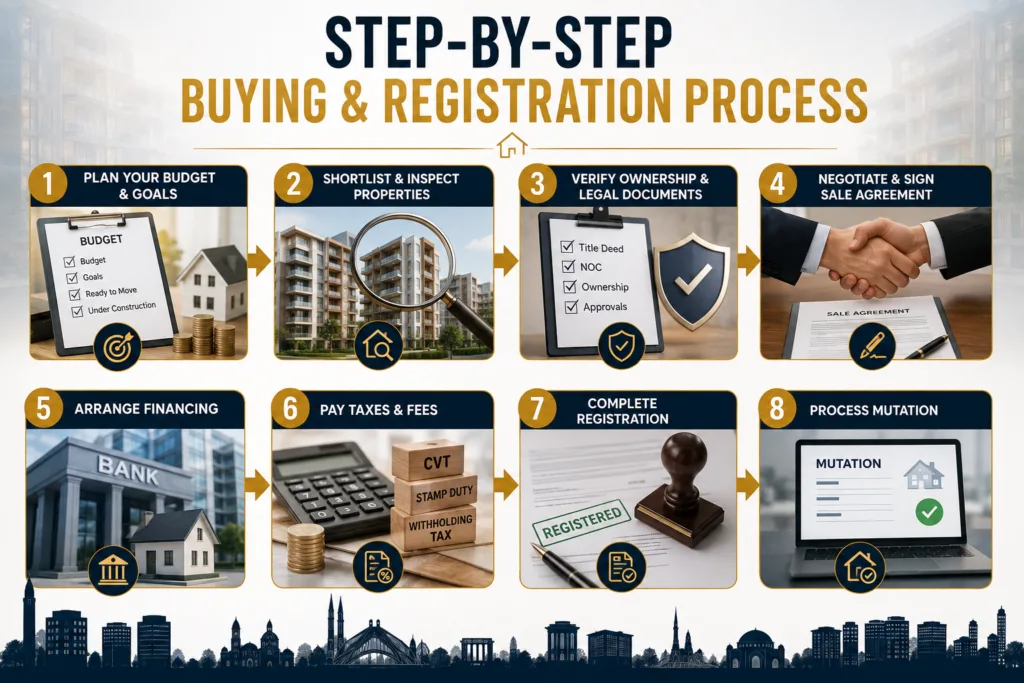
  8. Step-by-Step Buying & Registration Process
  9. A Special Note for Overseas Pakistanis
  10. Common Mistakes First-Time Buyers Make
  11. FAQs

1. Who Can Buy an Apartment in Pakistan?

Before anything else, it helps to know where you stand legally:

  • Pakistani nationals have unrestricted rights to buy property anywhere in the country.
  • Overseas Pakistanis enjoy relatively relaxed buying conditions but still need to follow proper legal and tax procedures, including obtaining a National Tax Number (NTN) through the FBR’s official IRIS portal.
  • Foreigners can buy property in Pakistan, but only after securing a No Objection Certificate (NOC), and certain areas may be restricted depending on the province.
  • Non-filers can legally buy an apartment too but they now pay a noticeably higher withholding tax than active tax filers, so registering as a filer on FBR’s IRIS system before your purchase can save you a significant amount.

2. Understand Your Buying Options

Not every apartment purchase looks the same. Before you fall in love with a unit, understand which category it falls into because each comes with a different risk and reward profile.

Ready-to-Move-In: The apartment is complete and available for immediate possession. You can physically inspect the actual unit multiple times before buying, which lowers risk. The trade-off is a higher purchase price and slower future appreciation compared to buying early.

Under-Construction: Lower entry cost, flexible payment plans, and generally higher appreciation potential by the time of completion. The risk is possession delays, so this option only makes sense with a builder who has a verified delivery track record.

New Launch Projects: The earliest and usually cheapest entry point, but also the highest-risk category you’re buying largely on trust and marketing material, so developer verification becomes non-negotiable here.

Resale Apartments: You get to see exactly what you’re buying and can often negotiate on price, but resale units require extra diligence on ownership history, outstanding dues, and mutation records.

If you want lower risk and can pay a premium, go ready-to-move. If you want better appreciation and can tolerate some construction risk, under-construction from a proven developer is usually the smarter financial move.

3. Plan Your Budget — Including the Costs Nobody Mentions

The listed price of the apartment is not what you’ll actually pay. Budget for these on top of the unit price:

  • Property registration fees (typically 1–3% of transaction value, varies by province)
  • Stamp duty
  • Capital Value Tax (CVT)
  • Withholding tax (rate depends on filer status check yours via FBR’s Active Taxpayer List verification)
  • Society or building maintenance deposit
  • Parking charges, where applicable
  • Legal and documentation fees if you’re using a lawyer or consultant

First-time buyers frequently budget only for the sale price and get blindsided by these additions at the registration stage. Set aside an additional buffer as a rule of thumb budgeting an extra 5–7% above the sale price covers most of these costs comfortably.

4. Financing Your Apartment: Bank Loans & Roshan Apna Ghar

If you’re not paying entirely from savings, you have real financing options in 2026 and they’re more affordable than they’ve been in years, following the State Bank’s policy rate cuts from a 22% peak in 2023 to roughly 10.5–11.5% today.

Standard bank loan process:

  1. Check your credit score and loan eligibility
  2. Compare interest rates across banks
  3. Choose between fixed or floating rates based on your risk tolerance
  4. Submit income proof, identity documents, and property paperwork
  5. Bank verifies the property and approves the loan
  6. Sign the loan agreement and begin EMI payments

Fixed vs. Floating rates: Fixed rates are typically higher but stay constant, giving predictable EMIs ideal if you have a limited or fixed income and want stability. Floating rates are usually lower and carry no prepayment penalty, but they move with the market, so they suit buyers who can tolerate some fluctuation.

For overseas Pakistanis: The State Bank’s Roshan Apna Ghar scheme allows non-resident Pakistanis to digitally buy, build, or renovate property with simplified paperwork, with financing available from 3 to 25 years in both conventional and Shariah-compliant formats. It’s paired with a Roshan Digital Account for remittance and payments you can open one directly through any RDA-participating bank’s website.

5. Choosing the Right Location and Developer

Location determines both your daily comfort and your resale value. Before deciding, check:

  • Proximity to your workplace and the city center
  • Access to schools, hospitals, and main roads
  • Public transport availability
  • Neighborhood safety and basic infrastructure (especially water supply)
  • Upcoming development projects nearby that could boost future value

Verify the society’s regulatory approval directly with the relevant authority — never take a developer’s word for it.
In Islamabad, this means checking a society’s NOC status with the Capital Development Authority (CDA). In Rawalpindi, the equivalent authority is the Rawalpindi Development Authority (RDA) — a society advertised as being “near Islamabad” or “twin cities” is not automatically CDA-approved just because it borders the capital; confirm which of the two bodies actually approved it, since CDA and RDA jurisdictions are separate and a project can be legitimate under one but unapproved or informally developed under the other. In Lahore, check with the LDA, and in Karachi, with the SBCA.

Developer verification matters just as much. Between 2019 and 2020 alone, roughly 1,000 developers launched apartment projects in Islamabad and Rawalpindi by 2024, only about 100 were still active. Before committing, check the builder’s completed project history, delivery timelines, and whether they’re still actively delivering projects today, not just marketing new ones. This is exactly the standard ISMMART Group of Industries holds itself to across its real estate ventures transparent documentation and a verifiable delivery record, not just marketing promises. You can review our portfolio at ismmartindustries.com.

6. The Complete Legal Checklist & Documentation

This is the section most guides rush through and where most fraud actually happens. Go through every item below before you pay a single rupee beyond a token/booking amount.

Documents to Verify Before Buying

Document Purpose Why It Matters
Title Deed Confirms current legal ownership Core proof the seller actually owns the property
Sale/Allotment Letter Proof of ownership in a housing scheme or from the original developer Confirms the chain of ownership
NOC (No Objection Certificate) Permission from relevant authority (CDA, RDA, LDA, or SBCA depending on city) for the sale Without this, the sale may not be legally enforceable
Mutation Documents Records the transfer of ownership in land records Shows the property’s ownership history is clean
Tax Receipts Proof that property taxes are fully paid Avoids inheriting the previous owner’s tax disputes
Building Approval Plan / Map Local authority-approved layout Confirms the structure itself is legally built
Occupancy/Completion Certificate Confirms the building was constructed as per approved plans Essential for ready or newly completed apartments
Encumbrance Certificate Confirms no outstanding loans, liens, or legal dues Protects you from inheriting hidden liabilities

Your Step-by-Step Verification Checklist

  1. Confirm the seller’s identity and ownership request the original title deed and mutation documents, not photocopies.
  2. Verify NOCs and approvals with the relevant local development authority CDA for Islamabad, RDA for Rawalpindi, or the LDA/SBCA equivalent for Lahore/Karachi.
  3. Check for a clear title confirm there are no mortgages, liens, or ongoing disputes attached to the unit.
  4. Request a tax clearance certificate, and cross-check the seller’s filer status through FBR’s Active Taxpayer List, to ensure all dues are settled before you take over.
  5. Ask for litigation history confirmation a simple written confirmation that no court case is attached to the property.
  6. Review the sale agreement carefully payment schedule, possession date, and penalty clauses should all be explicit in writing, never verbal.
  7. Complete registration at the relevant land/sub-registrar’s office, followed by mutation to formally record the change of ownership.

A verbal agreement, however trustworthy the seller seems, is nearly impossible to enforce later insist on formal, written documentation at every stage.

7. Understanding Property Taxes in 2026

Taxes are where most first-time buyers get caught off guard. Here’s what actually applies:

Tax Type Typical Rate Who Pays
Capital Value Tax (CVT) Varies by province Usually the buyer
Stamp Duty Varies by province and property type Paid at registration
Withholding Tax (Filers) Reduced significantly under 2026 reforms Deducted from the transaction
Withholding Tax (Non-Filers) Noticeably higher than filer rate Deducted from the transaction

Key 2026 update: The federal budget for FY2026–27 reduced the combined withholding tax rate for active filers to a flat 1.25% on purchase (2.75% for sellers) and formally abolished the Section 7E deemed-income tax on undeveloped land, after Pakistan’s Federal Constitutional Court declared it unconstitutional in May 2026 (Chakor Ventures, Trustpoint) collectively lowering the cost of buying and holding property this year compared to previous years. If you’re not currently a tax filer, registering with the FBR through IRIS before your purchase is one of the simplest ways to reduce your overall transaction cost.

8. Step-by-Step Buying & Registration Process

  1. Define your budget and goals decide between ready-to-move and under-construction based on your risk appetite.
  2. Shortlist and inspect properties never buy sight-unseen unless you’ve engaged a trusted representative to inspect on your behalf.
  3. Verify ownership and legal documents using the checklist above, including a direct NOC check with CDA, RDA, or the relevant city authority.
  4. Negotiate and sign the sale agreement, with every clause price, schedule, and possession date in writing.
  5. Arrange financing, if applicable, and complete bank verification including through Roshan Apna Ghar if you’re an overseas buyer.
  6. Pay applicable taxes and fees CVT, stamp duty, and withholding tax.
  7. Complete registration at the local land registry office.
  8. Process mutation to officially record your ownership in revenue records.

9. A Special Note for Overseas Pakistanis

If you’re buying from abroad, the process needs a few extra steps built in:

  1. Get your NTN (National Tax Number) from the FBR it’s mandatory for property registration and can be obtained online through the FBR IRIS portal without visiting Pakistan.
  2. Open a Roshan Digital Account to handle payments through formal, traceable banking channels most major banks let you open one entirely online.
  3. If you plan to buy, build, or renovate a home, apply through Roshan Apna Ghar, which offers financing from 3 to 25 years and lets you use your RDA holdings as collateral.
  4. Appoint a trusted representative ideally a professional with a Special Power of Attorney, attested by your nearest Pakistani Embassy or Consulate, to handle inspections, negotiations, and paperwork on your behalf.
  5. Request video tours and geotagged photos of the actual unit, and have your representative physically inspect it before you commit funds.
  6. Keep a Foreign Remittance Certificate for all funds transferred this can help you avoid certain withholding tax complications later.
  7. Verify 30–40 years of ownership history where possible, especially for resale units, to rule out disputed titles and confirm the society’s NOC directly with CDA, RDA, LDA, or SBCA rather than relying on the seller’s claim.

Overseas buyers are, unfortunately, a common target for fraud simply because physical verification is harder from a distance which makes a trustworthy local representative, a developer with a verified track record, and direct authority-level NOC verification the most important safeguards you have.

10. Common Mistakes First-Time Buyers Make

  • Budgeting only for the sale price and ignoring registration fees, taxes, and maintenance deposits
  • Choosing a location based on price alone, ignoring connectivity and future growth
  • Not verifying the developer’s actual delivery track record
  • Relying on verbal promises instead of a written, detailed sale agreement
  • Skipping a professional inspection before finalizing
  • Overlooking loan eligibility and realistic repayment capacity
  • Buying under sales pressure or “limited-time” discount offers
  • Not checking for unpaid taxes or utility dues tied to the property
  • Trusting a society’s marketed location (“near Islamabad,” “twin cities”) instead of confirming which authority CDA or RDA actually approved it
  • For overseas buyers specifically: skipping physical verification entirely and relying only on photos or brochures

11. FAQs

Is it a good idea to buy an apartment as a first-time investment in Pakistan? Yes apartments generally offer steady rental demand and lower maintenance responsibility compared to houses, especially in urban centers where land is scarce and vertical living is growing fast.

Can a non-filer legally buy an apartment in Pakistan? Yes, but non-filers pay a higher withholding tax than active filers. Registering as a filer through FBR’s IRIS portal before your purchase is a simple way to reduce your total cost.

What is the single most important document to verify before buying? The title deed, cross-checked against mutation records, since it confirms the seller actually has the legal right to sell the property.

Is buying an under-construction apartment safe? It can be, provided the developer has verified NOCs from the relevant authority (CDA, RDA, LDA, or SBCA), approvals, and a proven history of completing projects on time.

What documents do overseas Pakistanis need to buy an apartment? CNIC/NICOP, an NTN certificate (obtainable via FBR IRIS), proof of remittance through a Roshan Digital Account, and if using a representative an attested Special Power of Attorney.

Final Word

Buying your first apartment doesn’t have to feel like a gamble. The buyers who run into trouble are almost always the ones who skipped documentation checks, trusted verbal promises, or rushed the decision under sales pressure. Take the process step by step verify directly with the relevant authority, document everything in writing, and choose a developer whose track record you can actually confirm.

That last point is where most projects fall short and it’s exactly where ISMMART Group of Industries is built differently. Every apartment we offer in Islamabad comes with verified CDA-approved documentation, a transparent payment structure, and a delivery record you can check for yourself rather than take on faith. If you’re evaluating apartments in Islamabad and want a developer that already meets every item on this checklist, explore our current portfolio at ismmartindustries.com.

Apartment vs House vs Plot: Which Is the Smartest Investment in Pakistan (2026)?

Introduction

Every property conversation in Pakistan eventually lands on the same question: apartment, house, or plot which one is the smartest investment? Most guides answer it with a generic pros-and-cons list written years ago, comparing only two of the three options and ignoring how much the market and the cities themselves have actually changed.

2026 is not the same market it was even twelve months ago. The State Bank of Pakistan has cut its policy rate from a 22% peak in 2023 down to roughly 10.5–11.5%. The FY2026–27 federal budget abolished Section 7E the deemed-income tax on undeveloped land after Pakistan’s Federal Constitutional Court declared it unconstitutional in May 2026 (Chakor Ventures, Trustpoint). RERA has introduced formal investor protection for the first time in the country’s history. These shifts have quietly changed the return profile of all three asset types and most existing blogs simply haven’t caught up.

This guide breaks the decision down with real 2026 data, city-by-city society comparisons, the regulatory authorities you need to verify against, and real case histories not just opinions so you have a clear framework for deciding which option actually fits your goals.

Table of Contents

  1. What Is an Apartment, House, and Plot? — Quick Definitions
  2. Apartments: The Income Play
  3. Houses: The Balanced Choice
  4. Plots: The Long-Game Capital Growth Asset
  5. Side-by-Side Comparison Table
  6. City-by-City Reality Check: Societies, Authorities & Case Histories
  7. What Changed in 2026 That Nobody’s Talking About
  8. Which One Fits Your Investor Profile?
  9. The Mistake Most Investors Make
  10. Final Word

What Is an Apartment, House, and Plot?

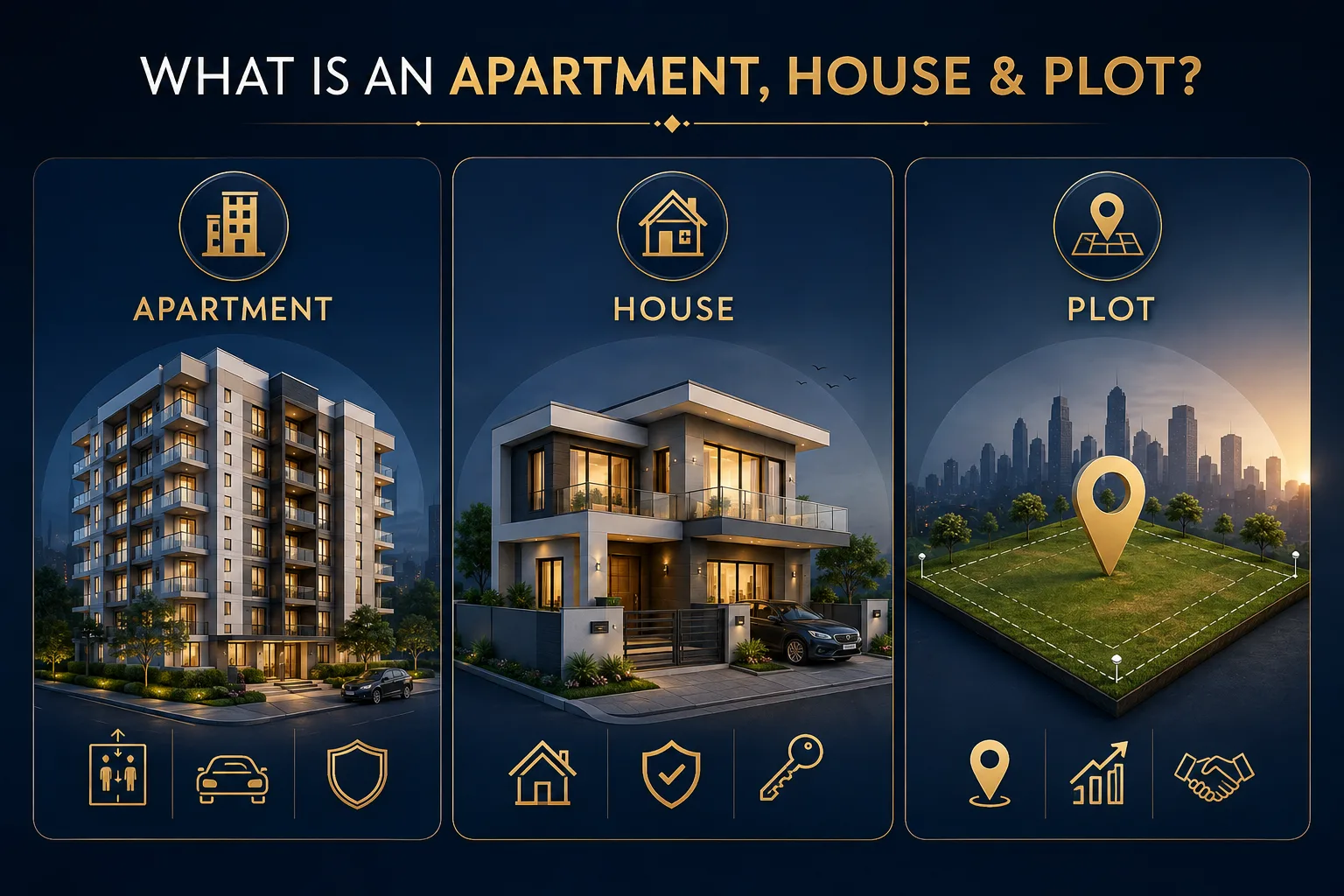
Before comparing returns, it helps to be clear on what each option actually means as an investment class in Pakistan.

Apartment (Flat): A residential unit within a multi-story building, typically part of a housing society or standalone tower, managed collectively through society or building maintenance fees. Ownership covers the unit itself, with shared rights to common areas like lifts, parking, and amenities.

House: A standalone or semi-detached residential structure built on its own plot of land, usually within a housing society, offering full ownership of both the structure and the land beneath it. A house can be purchased ready-built or constructed by the owner.

Plot: A parcel of undeveloped or partially developed land, purchased with the intention to build on it later, hold it for appreciation, or resell it. Plots are sold as residential, commercial, or agricultural, depending on the zoning of the housing society or area.

Each of these behaves differently as an investment in income potential, appreciation speed, liquidity, and risk. Here’s how they compare in detail.

Apartments: The Income Play

Apartments have become Pakistan’s fastest-growing property category as land scarcity pushes cities like Karachi, Lahore, and Islamabad to build vertically.

What the data says in 2026:

  • Gross rental yields for apartments across Pakistan average 6.24% nationally, according to Global Property Guide research.
  • Karachi’s residential market recorded an average gross rental yield of 6.67% in Q1 2026, among the strongest in the country (IQI Global).
  • In Lahore, apartments in Gulberg and DHA are pushing 7–8% net yield after service charges some of the highest returns of any asset class in the city (Royal Properties).

Pros:

  • Immediate, predictable monthly income once rented out
  • Lower entry price than a comparable house in the same location
  • Building maintenance is usually handled by the management company, not the owner
  • Strong demand from young professionals, small families, and expatriates who prefer secure, low-maintenance living

Cons:

  • Slower capital appreciation compared to plots
  • Value depends heavily on building maintenance and developer reputation
  • Harder to liquidate quickly than a plot in a prime location
  • Service charges and society dues eat into net rental income

The real risk to know about: Between 2019–2020, roughly 1,000 developers launched apartment projects in Islamabad and Rawalpindi alone. By 2024, only around 100 were still active (Gondal Group of Marketing). This is why builder due diligence matters more for apartments than for any other asset type you’re not just buying a unit, you’re betting on a company’s ability to deliver and maintain it. (See the Islamabad case history below for exactly what this looks like in practice.)

Houses: The Balanced Choice

A house sits between an apartment and a plot. It’s a place to live, but it also behaves like a real estate asset with its own appreciation curve.

What the data says in 2026:

  • The average house price in Lahore stood at PKR 5.32 crore as of the March 2026 Zameen price index, a figure that has stayed relatively flat year-over-year, signaling a market in a selective, not speculative, phase (Royal Properties).
  • Financing has become notably cheaper as the SBP’s policy rate fell from 22% in 2023 to roughly 10.5–11.5% by mid-2026, making mortgage products like Roshan Apna Ghar meaningfully more affordable than two years ago (Milkiyat).

Pros:

  • Combines lifestyle utility (you can live in it) with asset value
  • Land underneath the structure still appreciates even as the building ages
  • More financing options available compared to plots, since banks are generally more willing to lend against a built structure
  • Full control over renovation, expansion, and customization

Cons:

  • Highest upfront cost of the three options in most cases
  • Maintenance, repairs, and renovation costs fall entirely on the owner typically 1–3% of the property’s value annually (Izhar Monnoo Developers)
  • Slower to sell than a plot buyers need to personally like the layout, condition, and construction quality
  • Depreciation of the structure itself can offset gains if the property isn’t maintained

Who this suits: Buyers who want to eventually live in the property, families planning for the long term, and anyone who values a tangible, customizable asset over pure investment optimization.

Plots: The Long-Game Capital Growth Asset

Plots remain the most trusted store of long-term value in Pakistani real estate land doesn’t age, doesn’t need maintenance, and historically doesn’t depreciate.

What the data says in 2026:

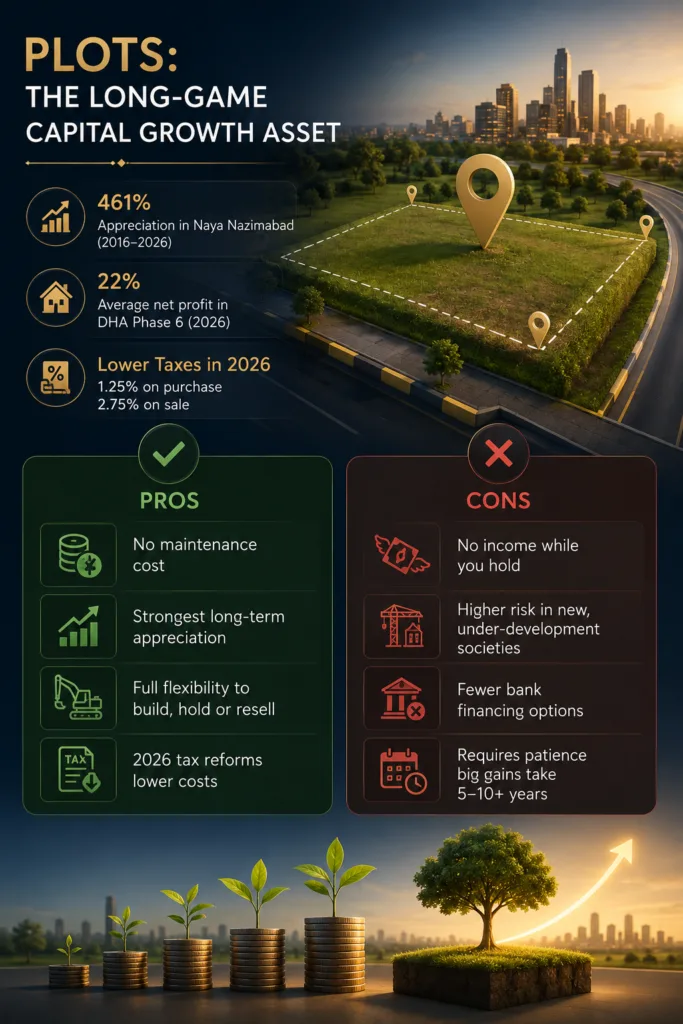
  • Naya Nazimabad in Karachi recorded cumulative capital appreciation of 461% between January 2016 and June 202 one of the clearest long-term case studies for plot appreciation in the country (IQI Global).
  • DHA Phase 6 recorded an average net profit of 22% on buy-renovate-resell strategies in 2026 alone (IQI Global).
  • The FY2026–27 federal budget abolished the Section 7E deemed-income tax on undeveloped land entirely and cut the combined withholding tax for active filers to a flat 1.25% on purchase and 2.75% on sale on a PKR 100 million transaction, that’s a meaningful direct saving, lowering both the cost of holding and exiting plots (Chakor Ventures).

Pros:

  • No maintenance cost land requires nothing to hold onto
  • Historically the strongest long-term appreciation of the three categories
  • Full flexibility to build, hold, or resell on your own timeline
  • 2026 tax reforms specifically reduced the cost of investing in and exiting land

Cons:

  • Generates zero income while you hold it no rent, no cash flow
  • Plots in new, under-development housing societies carry real risk, since services, possession, and full development take years
  • Fewer bank financing options compared to houses and apartments
  • Requires patience the biggest gains are typically realized over 5–10+ years, not months

Side-by-Side Comparison

Factor Apartment House Plot
Entry cost Moderate Highest Lowest to moderate
Monthly income Yes (6–8% yield) Only if rented out No
Capital appreciation Moderate Moderate Highest (long-term)
Liquidity (ease of resale) Moderate Slower Fastest
Maintenance responsibility Low (managed) High (owner) None
Bank financing availability Good Best Limited
Best time horizon 3–7 years 5–10+ years (or lifetime use) 5–10+ years
2026 regulatory tailwind Rate cuts improving affordability Cheaper mortgages Section 7E abolition + lower transaction tax

City-by-City Reality Check: Societies, Authorities & Case Histories

The comparison above holds true in general, but “apartment vs house vs plot” plays out very differently depending on which city you’re buying in and which income class of society you’re looking at. Here’s the breakdown for Pakistan’s three biggest property markets, including the regulatory bodies you need to verify against and real case histories worth knowing before you commit.

Islamabad — Regulated by the CDA

Every housing society in Islamabad needs an NOC (No Objection Certificate) from the Capital Development Authority (CDA) before it can legally sell plots, houses, or apartments (Sky Marketing). Always check a society’s live CDA approval status before booking anything here.

  • Elite / upper class: DHA Islamabad and Bahria Town Islamabad (Phases 7, 8, and Bahria Enclave) sit at the top. Bahria Town is known for 24/7 electricity, theme parks, and its own hospitals, while DHA is built around military-grade security and structured sector planning (4Dewaari, Sapphire Properties) both are the natural fit for buyers who want houses and plots in a fully self-contained, high-security lifestyle.
  • Upper-middle class: Naval Anchorage (developed by the Pakistan Navy, with its CDA-approved design dated 21 July 2005) is a strong fit for buyers who want CDA backing and a quieter, established environment without Bahria/DHA pricing (Mr. Property Marketing).
  • Middle class: B-17 (Multi Gardens) is the go-to for middle-class families wanting CDA-approved plots with Margalla Hills views it’s widely cited as the best “value for money” option in Islamabad West, especially now that Margalla Avenue links it directly to the F and E sectors (4Dewaari).

Apartment case history — The Centaurus (Sector F-8): This is Islamabad’s most recognizable vertical development and the best real-world example of how apartment projects actually unfold over time. The complex is owned by the Centaurus Group of Companies, chaired by Sardar Muhammad Ilyas Khan, with Sardar Rashid Ilyas Khan as President and Sardar Yasir Ilyas as CEO, and was developed by Pak Gulf Construction together with Al Tamimi Group (Saudi Arabia) and Sardar Builders (Wikipedia). Construction began in 2006 on a CDA-leased plot of 32,040 square yards, with the original approved plan calling for four towers — two residential (Towers A & B), one office (Tower C), and one 42-storey hotel (Tower D). The mall opened in 2013, and the residential apartment towers were completed and sold, but the project ran into a public dispute with the CDA in 2017 when Centaurus management tried to convert the office tower into a hotel tower instead of building the originally approved Tower D partly because the shopping mall had not yet secured its own completion certificate (Dawn). The Movenpick-branded hotel component didn’t actually open until early 2025 nearly two decades after construction started (Wikipedia). The lesson for apartment buyers: even a landmark, high-profile, CDA-leased project from a well-known ownership group can take years longer than promised and go through design and approval disputes mid-way. Verify a project’s current approval status and completion certificates not just its reputation or its owners’ name recognition before buying on installments.

Lahore — Regulated by the LDA (and RUDA for Ravi-side projects)

The Lahore Development Authority (LDA) issues NOCs for housing societies across the city; as of late 2025 there were roughly 320 LDA-approved societies in Lahore, ranging from decades-old schemes to projects approved as recently as 2024 (ABS Developers). Newer riverfront developments near Ravi also fall under the Ravi Urban Development Authority (RUDA).

  • Elite / upper class: DHA Lahore and Gulberg remain Lahore’s most prestigious addresses, offering houses, plots, and increasingly apartments in high-rise towers along MM Alam Road and Gulberg’s commercial belt, where units now command premium per-square-foot rates (Wall.pk). This is also where apartment rental yields are strongest in the whole city 7–8% net, as noted above.
  • Upper-middle class: Bahria Town Lahore, on Canal Road, spans multiple themed sectors (including Parisian-style blocks) and offers a full “lifestyle in one place” package with mosques, amusement parks, and hospitals popular with families who want DHA-level amenities at a lower entry price (Sapphire Properties, ABS Developers).
  • Middle class: Wapda Town and Johar Town are older, well-developed, LDA-approved schemes known for affordability alongside functioning infrastructure banks, branded shops, and established parks on the main boulevard (Union Developers).
  • Budget-conscious / first-time buyers: Naz Town and parts of Wapda Town offer some of the most affordable LDA-approved plots in the city, in the PKR 2–5 lac per Marla range as of late 2025 (ABS Developers).

Karachi — Regulated by the SBCA and KDA

In Karachi, the Sindh Building Control Authority (SBCA) approves and regulates housing society development and planning, while legacy schemes and land records often still reference the older Karachi Development Authority (KDA) framework (e.g., “KDA Scheme 33”) (Plotistan, ZameenLocator). Always confirm live SBCA approval status directly — Karachi has historically had more disputed and informally-developed schemes than Lahore or Islamabad.

  • Elite / upper class: DHA Karachi and Clifton are the city’s most expensive addresses, prized for coastal proximity, wide roads, and access to Clifton Beach, Dolmen Mall, and top private hospitals (Estate Safe Marketing).
  • Upper-middle class: Bahria Town Karachi, on the Karachi-Hyderabad Super Highway, is marketed as a self-contained “city within a city” with its own power, water, and security systems, and became especially popular during 2020 as families sought open space away from cramped city apartments (Property Pole). It comes with a significant legal case history every serious buyer should know (below).
  • Middle class: Naya Nazimabad, developed by Javedan Corporation (part of the Arif Habib Group), was launched in November 2011 near Sakhi Hasan as one of Karachi’s largest private-sector planned developments, aimed specifically at middle-income buyers with installment options (Wikipedia, Zameen). It’s a strong real-world case study for this income tier: plots here have appreciated a cumulative 461% between January 2016 and June 2026 (IQI Global), and the project now has multiple SBCA-approved NOCs covering both open plots and high-rise apartment blocks like Globe Residency (Manahil Estate) making it one of the few Karachi societies genuinely offering all three asset types (plots, houses, and apartments) to the same middle-class buyer.
  • Affordable / budget-conscious: Gulistan-e-Jauhar, Gulshan-e-Iqbal, and Scheme 33 (formerly co-managed by the KDA and the Board of Revenue) are the city’s established, budget-friendly options, popular for their proximity to universities, Safari Park, and major hospitals (Marina Builders, ZameenLocator).

Case history Bahria Town Karachi’s land dispute: This is the single most important cautionary case history in Pakistani real estate, and every Karachi buyer should understand it. In March 2019, Pakistan’s Supreme Court ruled that Bahria Town Karachi had illegally acquired roughly 16,896 acres of land in Malir district and ordered the developer to pay a Rs 460 billion settlement over seven years to legalize its holdings (Dawn). By late 2023, only about Rs 60.72 billion of that amount had actually been paid, and the Supreme Court issued fresh notices over the shortfall (Business Recorder). Because of this unresolved land status, mortgage financing for Bahria Town Karachi properties has remained largely unavailable, limiting the buyer pool mostly to cash buyers (Property Pole) a real, practical difference from DHA Karachi, where bank financing is routine. This doesn’t mean BTK is a scam development has continued, and the society remains genuinely popular, especially for houses and plots in developed precincts. But it’s a clear, real-world example of why “well-known and popular” is not the same as “fully clean on paper,” and why checking a society’s live legal and regulatory status matters even for the biggest names in the market.

What Changed in 2026 That Nobody’s Talking About

Most “apartment vs plot” content online is 2–3 years old and doesn’t reflect the current environment. Here’s what actually shifted this year:

  • Interest rates fell sharply. The SBP’s policy rate dropped from a 22% peak in 2023 to around 10.5–11.5% by mid-2026, making financing for houses and apartments significantly more accessible.
  • Land taxation got lighter a lot lighter. Section 7E, the deemed-income tax on undeveloped land, has been fully abolished under the FY2026–27 Finance Bill, after Pakistan’s Federal Constitutional Court declared it unconstitutional in May 2026. Advance tax on property sales for filers also dropped to a flat 2.75%, and purchase-side tax to 1.25% (Chakor Ventures). This directly improves the economics of holding and exiting plots specifically.
  • RERA introduced formal investor protection. For the first time, Pakistan has a regulatory framework offering real estate investors a layer of formal protection a meaningful shift for anyone nervous about developer reliability, especially in the apartment segment where builder attrition has historically been high (see the Centaurus and 1,000-builder examples above).
  • Inflation has cooled but remains a factor. Real estate continues to function as one of the few assets that generates income and grows in value simultaneously, even as broader price pressures ease.

Which One Fits Your Investor Profile?

  • You want passive monthly income and don’t want to deal with construction: Apartment, in an established, well-managed building with a verified delivery track record ideally in a high-yield pocket like DHA/Gulberg Lahore or Karachi’s stronger residential zones.
  • You’re buying for your family to live in, with investment as a secondary goal: House, ideally in a developed, LDA/CDA/SBCA-approved area with confirmed bank financing availability.
  • You have a 7–10 year horizon and want maximum capital growth, with no need for income along the way: Plot, preferably in a developed section of a reputable, currently-approved housing society (Naya Nazimabad and DHA Phase 6 are useful reference points for what strong long-term plot appreciation actually looks like).
  • You’re an overseas Pakistani looking for a hands-off asset: A completed apartment with existing tenants, or a developed plot in an established society both reduce the on-ground management burden compared to an under-construction house.

The Mistake Most Investors Make

They pick a category before picking a developer. The single biggest driver of returns or losses in all three categories isn’t apartment vs house vs plot. It’s who you’re buying from, and which authority has actually approved the project. A NOC-approved project from a developer with a verified delivery track record will consistently outperform an unapproved, cheaper alternative in any category and, as the Centaurus and Bahria Town Karachi case histories above show, even big, recognizable names can carry real regulatory and delivery risk. Before committing capital, verify the project’s live CDA/LDA/SBCA approvals, the developer’s completed project history, and whether the builder is still active and delivering in the current market.

Final Word

There’s no universally “best” investment among apartments, houses, and plots only the one that matches your capital, your timeline, your need for income versus growth, and the specific city and society you’re buying into. What 2026 has changed is the cost of getting there: cheaper financing, the abolition of Section 7E, and a regulatory framework that finally gives investors some protection.

At ISMMART Group of Industries, we help investors evaluate decisions like this the same way we approach every investment across our subsidiaries with transparency and a long-term view rather than sales pressure. For more details on our real estate portfolio, visit ismmartindustries.com